

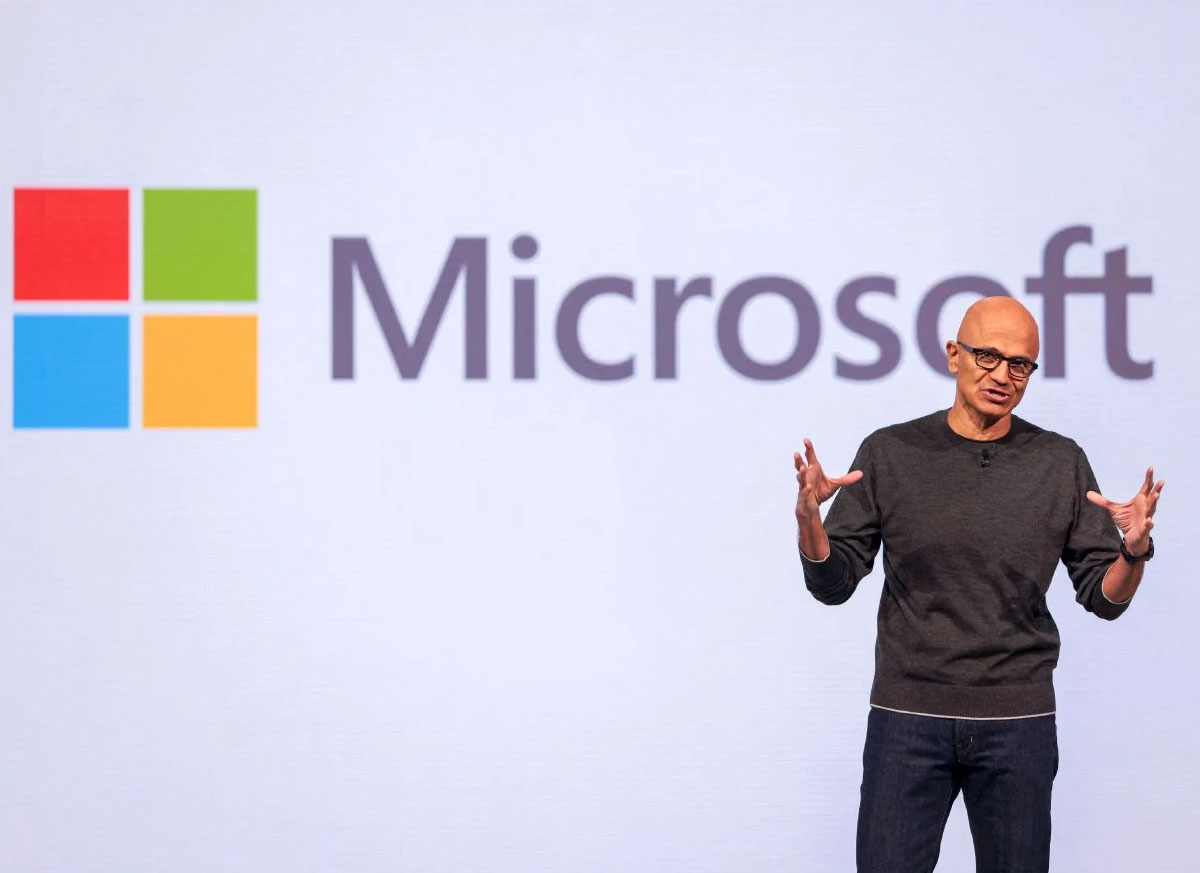
Photo Credit: Getty Images
"Unless we act with urgency, a widening AI divide could define this century," warned Microsoft leaders as the company unveiled a sweeping $50 billion commitment aimed at expanding artificial intelligence access across developing economies by 2030.
The announcement was delivered by Microsoft Vice Chair and President Brad Smith and Chief Responsible AI Officer Natasha Crampton during the AI Impact Summit 2026, where policymakers and technology executives gathered to debate AI's global future.
Microsoft's latest AI Diffusion analysis underscores the scale of the challenge. Adoption rates in the Global North are nearly twice those in the Global South, echoing disparities once seen in access to electricity and broadband. Without coordinated action, leaders cautioned, AI could entrench inequality rather than unlock shared prosperity.
To counter that risk, Microsoft outlined a five-part framework designed to expand opportunity.
The company is channeling billions into data centers, electricity and connectivity projects across Africa, Latin America and Asia. Efforts to widen internet access have already connected 117 million people in Africa, part of a broader push to reach 250 million underserved individuals.
Through training programs such as Microsoft Elevate, the firm plans to equip 20 million people with AI capabilities by 2028, with a significant focus on India by 2030. Educators, students and nonprofit groups will receive tools and structured learning support.
Initiatives including LINGUA Africa aim to ensure AI tools reflect diverse languages and cultures, enabling broader participation in digital innovation.
Microsoft is collaborating with communities to tailor AI solutions to regional priorities, from agricultural resilience in Kenya to sustainable farming practices in India.
By contributing data to global AI indices, the company intends to measure diffusion rates and guide future investments more precisely.
Framed as both an investment and a call to partnership, the initiative urges governments, nonprofits and businesses to cooperate so AI becomes a bridge to growth rather than a barrier.