
Photo Credit: Getty Images

India and Canada have signed a 10-year nuclear energy deal and several other agreements following a meeting between Prime Ministers Narendra Modi and Mark Carney in Delhi. The pacts cover technology, defense, and critical minerals, aimed at repairing a relationship strained by recent diplomatic tensions. The leaders also pledged to finalize a long-awaited free trade agreement by the end of 2026 to mitigate the impact of punitive US trade tariffs.


Photo Credit: Getty Images

The Bangladesh Nationalist party (BNP), led by Tarique Rahman, has secured a landslide victory in Bangladesh’s first general election since the uprising that removed Sheikh Hasina from power.

Official results released by the election commission show the BNP-led alliance winning 212 parliamentary seats, marking the party’s return to government after two decades. The rival bloc, headed by Jamaat-e-Islami, captured 77 seats.

The vote has been widely described as Bangladesh’s first genuinely competitive and credible election in nearly 20 years, following a prolonged period of political repression and unrest under Hasina’s leadership. Salahuddin Ahmed, a senior BNP figure, said the outcome reflected public expectations, adding that voters had placed their faith in a party capable of fulfilling the aspirations that fuelled the youth-led uprising.

Despite the celebratory mood among supporters, BNP leaders acknowledged the scale of the challenges ahead. The party has promised to usher in a new democratic era and adopt a zero-tolerance stance on corruption. Ahmed cautioned that rebuilding a country free from discrimination and instability would require sustained effort.

India was among the first to extend congratulations. Prime minister Narendra Modi described the BNP’s win as decisive and reaffirmed India’s commitment to supporting a democratic and inclusive Bangladesh. Relations between the neighbouring countries had deteriorated sharply following Hasina’s removal, and Modi’s message was interpreted as a gesture toward resetting ties.

The United States and Pakistan also congratulated the BNP on its victory.

Rahman, who returned to Bangladesh in December after 17 years in exile in London, is now set to become prime minister. He is the son of former prime minister Khaleda Zia and former president Ziaur Rahman, who was assassinated in 1981, placing him at the centre of one of the country’s most prominent political dynasties.

Shafiqur Rahman, leader of Jamaat-e-Islami, conceded defeat but signalled that his party would pursue what he termed “positive politics” rather than opposition for its own sake. Nevertheless, Jamaat alleged irregularities in closely contested constituencies and questioned aspects of the vote-counting process. The party’s performance, significantly higher than in previous elections, positions it as a strong opposition force.

The election marked a turning point after years of controversy surrounding polls held under Hasina’s Awami League, which was barred from contesting this time. Past elections had been overshadowed by allegations of vote-rigging, enforced disappearances and suppression of dissent, as documented by rights groups and the United Nations.

Voters across the capital, Dhaka, described the experience as their first opportunity in years to cast ballots freely. Nationwide turnout reached 59.4%, according to preliminary figures — significantly higher than the previous election’s 42%. Overseas voters and officials voting by post recorded an 80.11% participation rate. 

The student-led revolt that ended Hasina’s 15-year rule in August 2024 was driven by anger over corruption, human rights abuses and economic decline. The crackdown on protesters left an estimated 1,400 people dead, according to the UN.

Photo Credit; Getty Images

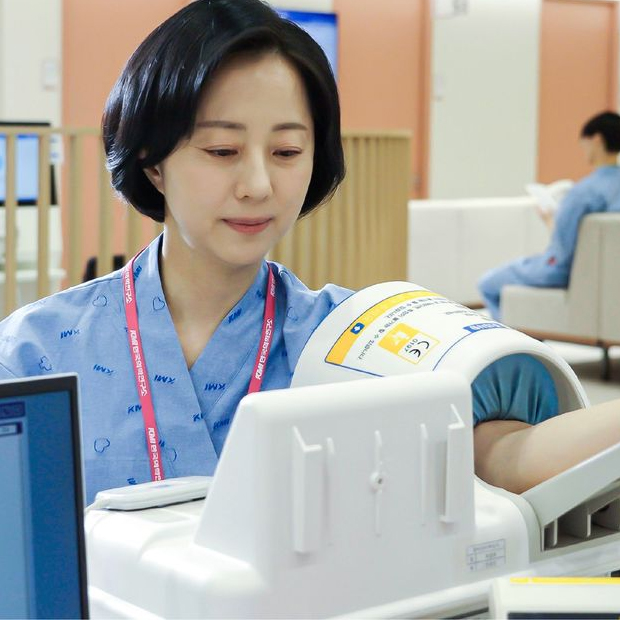
South Korea has recorded its second consecutive annual rise in births, offering a rare moment of relief for a country long defined by its deepening demographic crisis. In 2025, 254,500 babies were born, marking the largest annual increase in 15 years. While the numbers remain low by historical standards, the 6.8 percent increase signals a notable shift after years of steady decline.

The country’s fertility rate, which measures the average number of children a woman is expected to have over her lifetime, rose to 0.80 in 2025, up from 0.75 the previous year. It is the first time since 2021 that the rate has returned to the 0.8 range. Even so, South Korea remains the only OECD country with a fertility rate below 1.0, far beneath the 2.1 level typically considered necessary to maintain a stable population without immigration.

Despite the uptick in births, the broader demographic picture remains challenging. Deaths continued to outnumber births by 108,900 in 2025, meaning the overall population is still shrinking. The recent improvement does not yet reverse the long term trend of population decline, but it does suggest that certain demographic forces are temporarily working in the country’s favor.

Photo Credit: Getty Images

South Korea’s intelligence agency told lawmakers on Thursday that North Korean leader Kim Jong Un has chosen his daughter, Kim Ju Ae, as his heir. Little is publicly known about Kim Ju Ae, though she has increasingly appeared at high‑profile events alongside her father in recent months, including a September visit to Beijing that was her first known trip abroad.

Photo Credit: Getty Images

Kim Jong Un has been re-elected as the general secretary of North Korea’s ruling Workers’ Party. According to state media, the formal appointment took place Sunday at a party congress in the capital. The move further solidifies the Kim family's decades-long rule, which began nearly 80 years ago.


Photo Credit; Getty Images

A South Korean official who suggested the country "import young women" from "Vietnam or Sri Lanka" to boost its birth-rate has been expelled from his party.

Kim Hee-soo, the head of the southern Jindo County, said the woman could be married off to "young men in rural areas" during a town hall last week.

The suggestion comes as South Korea continues to grapple with the lowest birth-rates in the world, which could see the country's 50 million-strong population drop by half in 60 years.

But Kim's statement, which was televised, did not go down well - triggering a diplomatic protest from Vietnam, days of public anger and his expulsion from the ruling Democratic Party.

Photo Credit: Getty Images

A significant trade agreement has been sealed between the Trump administration and Indonesia, poised to dramatically reshape bilateral economic ties. This landmark deal will see US tariffs on Indonesian products slashed, while simultaneously unlocking Indonesia's market to American goods with a commitment for over $30 billion in purchases. The move signals a strategic deepening of economic cooperation.


Photo Credit; Getty Images

Hong Kong media tycoon, Jimmy Lai has been sentenced to 20 years in prison, bringing to a close a years-long legal saga that has become a defining symbol of Beijing’s sweeping crackdown on the once politically vibrant city.

The 78-year-old billionaire, one of the most prominent critics of the Chinese government, is among the highest-profile figures prosecuted since Beijing imposed its national security law on Hong Kong in 2020. The sentence is the longest handed down under the law and effectively rules out any possibility of parole until Lai is in his late 90s.

The ruling has intensified international calls for his release following a closely watched

trial that drew attention from Western leaders. US President Donald Trump had previously vowed to “get him out,” and supporters are expected to press the issue as Trump prepares for a possible visit to China in the coming months.

Lai’s family condemned the sentence in emotional terms. His son, Sebastien, described it as draconian and “life-threatening,” while his daughter, Claire, said it was “heartbreakingly cruel.”

“I have watched my father’s health deteriorate dramatically and the conditions he’s kept in go from bad to worse. If this sentence is carried out, he will die a martyr behind bars,” she said.

Lai’s outspoken criticism of Hong Kong’s shrinking freedoms and his role as founder of the now-defunct pro-democracy tabloid Apple Daily had long placed him in conflict with Beijing. Authorities in both Beijing and Hong Kong have consistently rejected claims that his prosecution was politically motivated or an attack on press freedom, insisting he has received adequate medical care in custody.

City leader John Lee accused Lai of using Apple Daily to “poison the minds of citizens, incite hatred, distort facts, deliberately create social division, glorify violence, and openly beg external forces to sanction China and the Hong Kong Special Administrative Region.”

RECENT NEWS

LATEST JOB OFFERS

AROUND THE CITIES