

Photo Credit:Getty Images
Japan’s Defence Minister Shinjiro Koizumi has strongly rejected China’s accusations that Tokyo is embracing a new era of militarism, arguing instead that China’s expanding military capabilities pose a greater concern to regional security.
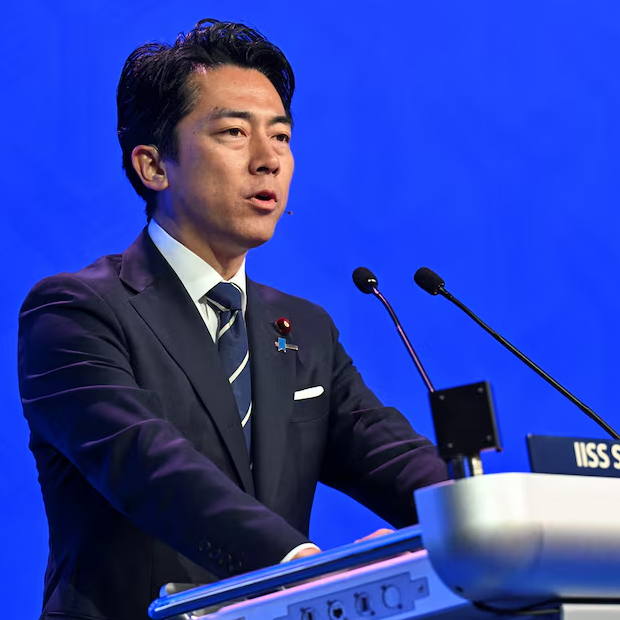
Speaking at the Shangri la Dialogue defence summit in Singapore, Koizumi dismissed Beijing’s claims that Japan is pursuing a militaristic agenda. His remarks came after China’s Ministry of National Defence accused Japan of accelerating what it described as “neo militarism” through increased military spending and defence reforms.
The exchange marks one of the sharpest public confrontations between the two countries in recent months and highlights growing tensions in East Asia over security, defence policy and regional influence.
China’s criticism was voiced shortly before the Singapore summit when defence ministry spokesman Jiang Bin warned that “the grey rhino of a remilitarised Japan is gathering speed”. He called on the international community to work together to contain what Beijing described as Japan’s military ambitions.
Japan, however, insists that its actions are defensive in nature. During his address, Koizumi said it was natural for countries to modernise their military capabilities in response to changing security challenges.
He stressed that Japan would continue to strengthen its defence forces while maintaining a high level of transparency and communication with neighbouring countries.
“What are we developing these capabilities for? And based on what thinking? Japan will move forward while making a clear explanation to the international community,” Koizumi said.
The defence minister also challenged China’s criticism by pointing to Beijing’s own military expansion. Without directly naming China at first, he noted that there was a country possessing a vast arsenal of nuclear weapons and strategic bombers, capabilities that Japan does not possess.
“There is a country that has a huge arsenal of nuclear weapons and strategic bombers. Japan has neither of these weapons. And yet Japan is labelled with new militarism. Isn’t it strange?” he said.
The dispute reflects a long and complicated relationship between the two Asian powers. Historical grievances stemming from Japan’s invasion of China during the Second World War continue to influence diplomatic relations. During a question and answer session following his speech, a representative of the Chinese military asked whether Japan would issue another apology to victims in China, South Korea and Southeast Asia for wartime actions.
Koizumi avoided directly answering the question but reiterated concerns about China’s military growth, arguing that Beijing continues to increase defence spending and expand military capabilities without sufficient transparency.
At the same time, he emphasised that Japan remains open to dialogue with China and that communication channels should remain active despite disagreements.
The debate comes as Prime Minister Sanae Takaichi pursues an ambitious defence agenda. Japan has increased military spending for twelve consecutive years and approved a defence budget exceeding nine trillion yen. The government plans to invest in advanced missiles, land and underwater drones and other defence technologies.
Tokyo has also relaxed rules governing the export of lethal weapons and is preparing revisions to key security documents. Takaichi has further advocated revising Article 9 of Japan’s constitution, the post war pacifist clause that renounces war.
These changes have sparked intense debate within Japan. Supporters argue that a stronger military is necessary in light of regional security challenges, particularly concerns about China and Taiwan. Critics, however, fear that the country is moving away from the pacifist principles that have shaped its national identity since the end of World War Two.
Public opposition has become increasingly visible, with anti war demonstrations taking place across Japan. Some of these protests have grown into the largest seen in decades, reflecting deep divisions over the country’s future security direction.
As tensions between Tokyo and Beijing continue, the exchange at the Shangri la Dialogue underscores the growing challenge of balancing national security concerns with regional stability in one of the world’s most strategically important regions.