

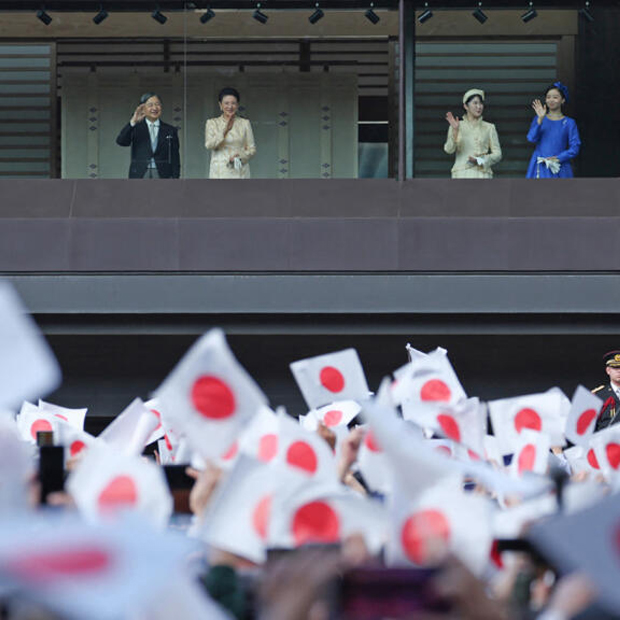
Photo Credit: Getty Images
Japan has taken a significant step toward addressing concerns over the future of its imperial family after lawmakers approved major reforms to succession related regulations.
The country's upper house passed legislation designed to expand the size of the imperial family and strengthen its long term stability. The measure follows years of debate about the shrinking number of royal family members and the limited pool of potential successors to the Chrysanthemum Throne.
Under the new law, the imperial family will be permitted to adopt distant male relatives who are descendants of former imperial branches. These branches lost their royal status following reforms introduced after the Second World War.
The legislation also allows female members of the imperial family to retain their royal status after marrying commoners. Previously, women who married outside the imperial household were required to surrender their titles and leave the family.
Supporters believe the changes will help address practical challenges facing the monarchy. With fewer royal family members available to perform official duties, concerns have grown about the institution's ability to maintain public engagements and ceremonial responsibilities.
Despite these reforms, the law does not alter one of the most debated aspects of Japan's imperial system. Women remain barred from ascending the throne.
As a result, Princess Aiko, the only child of Emperor Naruhito, remains ineligible to become emperor despite widespread public support for female succession.
The issue has become increasingly urgent due to the limited number of male heirs. Crown Prince Fumihito, the emperor's younger brother, is currently first in line to the throne. His son, Prince Hisahito, follows him in the line of succession.
Beyond them, the list of eligible heirs becomes extremely short. Without future male descendants, questions have persisted about how the monarchy could continue under existing rules.
Opinion polls consistently indicate strong public support for allowing women to inherit the throne. Recent surveys suggest that more than seventy percent of Japanese citizens favor the idea of a female emperor, while some polls place support above eighty percent.
Nevertheless, conservative political leaders continue to defend male only succession, arguing that it preserves the legitimacy and traditions of the monarchy.
The newly approved legislation represents the most significant revision to Japan's Imperial House Law since 1949. While it stops short of introducing female succession, it demonstrates a willingness among lawmakers to adapt long standing traditions in response to modern realities.
As Japan seeks to preserve one of the world's oldest hereditary monarchies, the debate over the future of imperial succession is likely to remain an important national issue for years to come.