

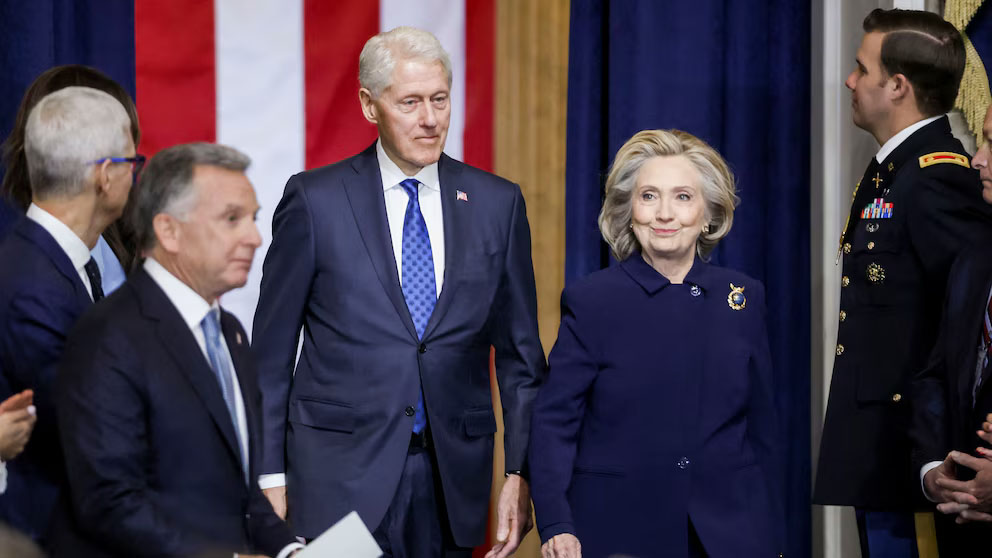
Photo Credit; Getty Images
Former US President Bill Clinton and former Secretary of State Hillary Clinton have agreed to appear for in-person depositions in Washington, DC, as part of the House investigation into Jeffrey Epstein, in a late move aimed at avoiding a looming contempt of Congress vote.
It remains unclear whether House Oversight Committee Chairman James Comer will accept the last-minute offer, which could halt a full House vote to hold the Clintons in contempt for months of refusing to testify. Such a vote could carry potential legal consequences.
The proposal, which has not been independently reviewed, underscores the urgency of the Clintons’ effort to prevent the contempt proceedings from moving forward.
“They negotiated in good faith. You did not. They told you under oath what they know, but you don’t care. But the former President and former Secretary of State will be there. They look forward to setting a precedent that applies to everyone,” Clinton spokesperson Angel Ureña said in a post directed at Comer.
Comer responded Monday evening, saying the offer still lacked clarity. He said the Clintons’ lawyers had not provided specific dates for the depositions and argued that the agreement only came after the House advanced contempt proceedings. He said he would seek clarification on the terms before consulting with committee members on next steps.
The top Democrat on the Oversight Committee, however, expressed confidence that the offer would be accepted, telling CNN that the Clintons had agreed to every condition laid out by Comer.
Representative Robert Garcia said the committee had long sought Bill Clinton’s testimony and welcomed the development, adding that discussions with the Clintons’ legal team had been ongoing.
Just hours before the offer was made, Comer had indicated he was prepared to proceed with contempt resolutions, citing the Clintons’ failure to comply with subpoenas issued nearly six months earlier and their absence from scheduled depositions. He accused them of seeking special treatment and said their conduct undermined the public’s demand for transparency.