

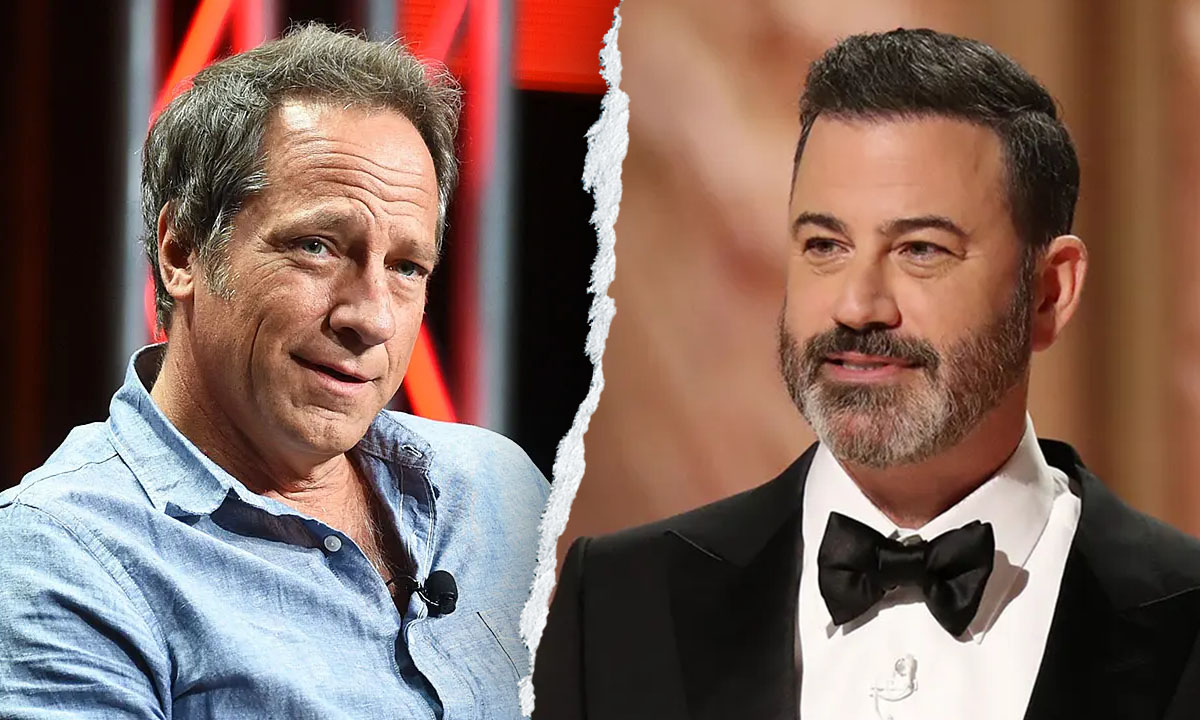
Photo Credit; Getty Images
Dirty Jobs host Mike Rowe is pushing back against late-night comedian Jimmy Kimmel following controversial jokes about former plumber turned Homeland Security Secretary Markwayne Mullin.
The criticism stems from a recent monologue in which Kimmel questioned whether someone with a background in plumbing should oversee national security matters, drawing swift reactions online.
Rowe addressed the backlash in a detailed social media post, saying he was less offended by the joke itself and more troubled by what he described as a dismissive view of skilled trades.
"Being offended is always a choice," Rowe wrote, adding that he does not object to humor but takes issue with the idea that workers must remain in one lane.
Referencing Mullin's rise from business owner to public office, Rowe argued that such a path reflects ambition and adaptability rather than incompetence. He pointed out that expertise can evolve over time and should not be confined to a single profession.
Kimmel had earlier joked that he would not trust a plumber with national defense responsibilities in the same way he would not call a general to fix a household issue, a comparison critics labeled elitist.
Rowe countered that such arguments overlook the broader value of hands-on experience and the discipline required to build a successful trade business. He emphasized that Mullin created jobs and opportunities before entering politics.
The television host also highlighted the ongoing shortage of skilled labor in the United States, warning that dismissing such careers only widens the gap.
Ultimately, Rowe framed the debate as part of a larger conversation about respect for working-class professions and the freedom to pursue new challenges beyond one's original field.
He concluded by questioning why career growth should be criticized rather than celebrated, suggesting that diverse experiences can strengthen leadership in any arena.
As reactions continue to circulate across media platforms, the exchange between Rowe and Kimmel underscores an enduring cultural divide over how different professions are valued in public life and political discourse today and beyond immediate headlines and viral moments shaping opinion nationwide and sparking further debate among audiences everywhere today.