

Photo Credit: Getty Images
In a cavernous soundstage filled with ice blocks, severed limbs, and flayed cadavers, Guillermo del Toro is crafting the movie of his life: Frankenstein. After 30 years of filmmaking, the 60-year-old director finally brings to screen his operatic, deeply personal version of Mary Shelley’s 1818 novel—a story not just of science gone awry, but of broken families, abandoned children, and the eternal question: Why am I here?
Jacob Elordi stars as the reanimated creature—still hidden from public view—described as a marble statue shattered and pieced back together. His casting came unexpectedly after Andrew Garfield exited the film due to scheduling conflicts. For del Toro, it was divine intervention. “Jacob is the most perfect actor for the creature,” he says. Towering at six-foot-five with a presence both haunting and innocent, Elordi became the physical and emotional canvas for a monster forged in trauma, yearning, and existential rage.
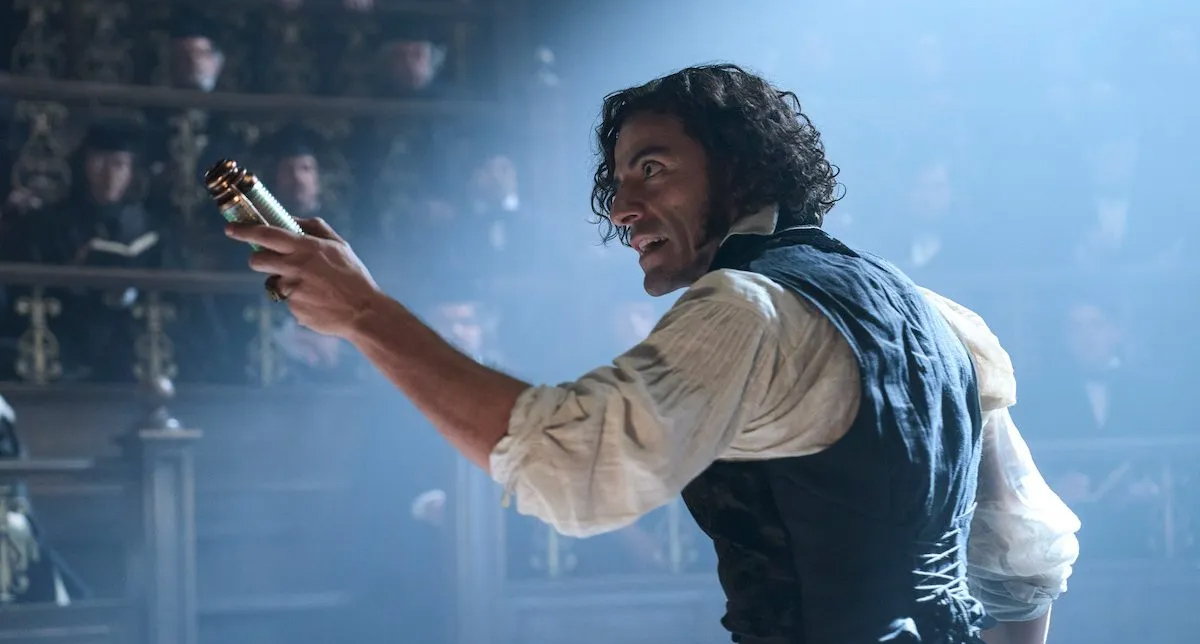
Oscar Isaac plays the obsessive Dr. Victor Frankenstein, constructing his creature in a breathtaking 360-degree lab set inside an ancient Carpathian water tower. Amid sculpted silverwork and columns of glowing glass, the doctor’s grim “surgery” unfolds. “Bone surgery is a lot like carpentry,” del Toro quips on set, urging Isaac to be forceful, to treat the body like an object. Isaac, sweaty and smiling, embraces the grim humor: “I think instead of calling myself an actor, I’m going to introduce myself as a traumatologist.”
This Frankenstein doesn’t just riff on Shelley’s cautionary tale of unchecked ambition. Del Toro centers the narrative around fatherhood, faith, and inherited pain. Victor’s relationship with his imperious father (played by Charles Dance) echoes in how he treats his creation—with cruelty masquerading as purpose. “The father becomes his father to his son without realizing it,” del Toro explains.
The monster, in turn, becomes a vessel of grief and rage, navigating a world that offers him neither answers nor kindness—save for brief mercy from Mia Goth’s Elizabeth and a blind man played by David Bradley. The creature’s suffering draws parallels to del Toro’s Pinocchio and even the Book of Job. “Why do bad things happen to good people?” del Toro asks. The answer, like in scripture, remains unknowable—and brutal.
Though the film is steeped in darkness, del Toro brings his signature absurdity and humanity. Spanish jokes on set, Frankenstein props named “Yorick” and “Canadian Bacon,” and the haunting pressure of real ice melting beneath the corpses ground the production in tactile reality.
Del Toro’s Frankenstein is as much about legacy as it is about reinvention. Homages to Karloff’s monster, Bernie Wrightson’s illustrations, and Mary Shelley herself permeate the project. “We are just doing a beautiful mass,” del Toro says reverently. “The church is not built by us, but we are delivering a great, passionate soul-searing sermon in that church.”
Frankenstein premieres at the Venice Film Festival and will stream on Netflix in November. It promises to be more than a horror film—it’s a gothic family tragedy, a philosophical reckoning, and a resurrection of cinema’s most misunderstood son.






