

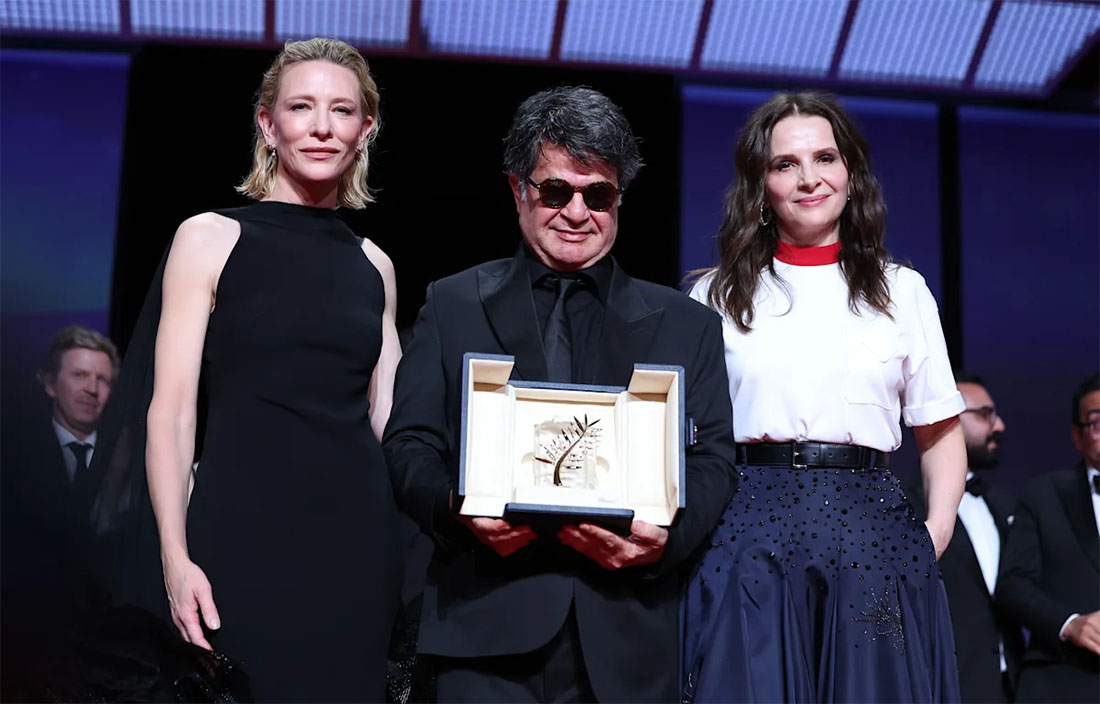
Photo Credit: Getty Images
Iranian filmmaker Jafar Panahi, one of the most celebrated directors in contemporary cinema, is preparing for his first-ever Oscar campaign with his Cannes Palme d’Or-winning film It Was Just an Accident. Long recognized as a dissident voice and a master of world cinema — with top prizes from Cannes, Berlin, and Venice — Panahi has never been in contention for an Academy Award. The reason is simple: Iran has consistently refused to submit his films for consideration.
That could now change. The film’s French producer Philippe Martin and its U.S. distributor Neon are spearheading a campaign to secure Oscar recognition, with hopes that France may put the film forward as its international feature contender. France’s national film body CNC has already cleared the film to be included on the shortlist of potential submissions.
Panahi, who was long banned from filmmaking in Iran and twice imprisoned, has already begun traveling in support of the film. After appearances at Cannes and Sydney, he has obtained a U.S. visa and is set to attend both the Telluride and New York Film Festivals, where he will also receive tributes. Toronto will honor him as well, and Busan has named him Asian Filmmaker of the Year.
It Was Just an Accident follows a group of former political prisoners who kidnap a man they believe to be their past interrogator. Neon will release the film in U.S. theaters on October 15.
For Panahi, the Oscars represent more than personal recognition. In an interview, he criticized the Academy’s international feature rules, which require countries to officially submit films for consideration. “The Academy is the only cultural entity that makes filmmakers around the world depend on their governments,” he said. “These rules work for democratic governments but not for countries with despotic regimes.”
He argued that the system effectively forces filmmakers from authoritarian nations to align with their governments’ taste in order to be eligible. Panahi suggested that, like the Olympics’ category for independent athletes, the Academy should create a pathway for independent filmmakers excluded from their national submission process. He revealed that a group of filmmakers is drafting a letter to the Academy calling for reforms.
Panahi acknowledged that winning an Oscar could be transformative. “It would benefit many independent filmmakers who don’t want to be under the pressure of censorship. They would be able to make films without worrying about government limitations,” he said. For him, the struggle recalls his two-decade ban from filmmaking in Iran, which he defied by continuing to make internationally acclaimed works in secret.
As France and Luxembourg deliberate on whether to champion It Was Just an Accident for the Academy race, Panahi remains focused on the broader stakes. An Oscar, he insists, would not only honor his film but also send a powerful signal of hope to filmmakers resisting censorship worldwide.






