

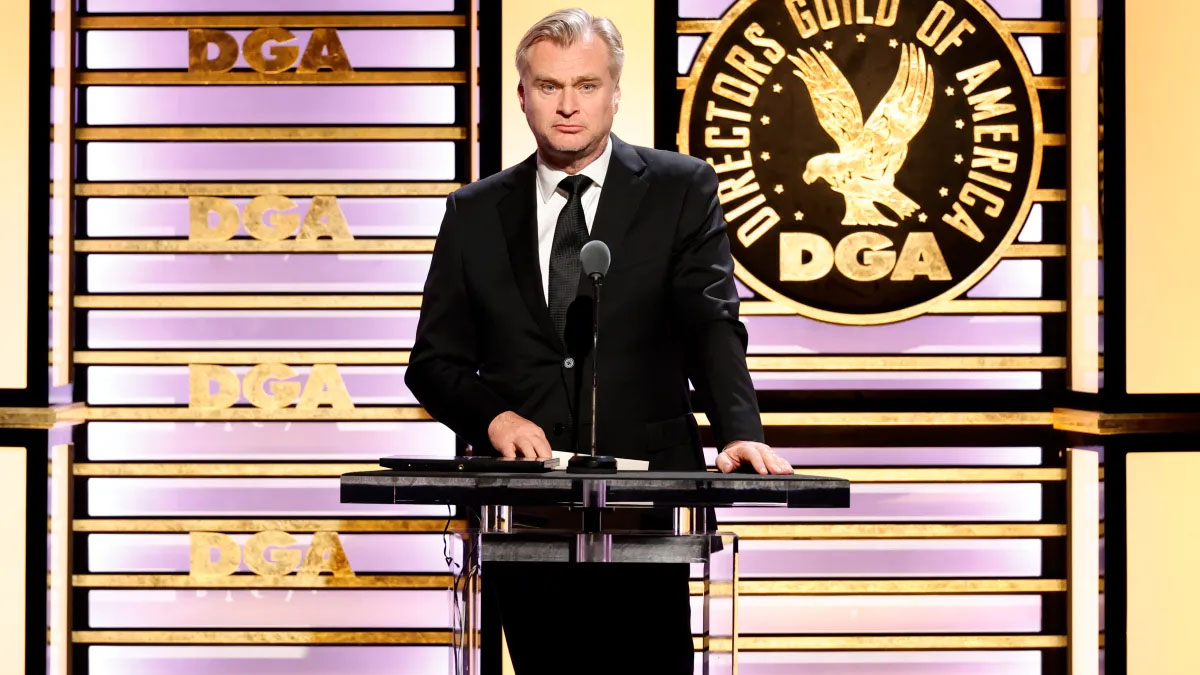
Photo Credit; Getty Images
Christopher Nolan is stepping into one of the most consequential roles of his career at a time when the film and television industry is facing deep structural uncertainty. Best known as an Oscar winning filmmaker and a vocal champion of theatrical cinema, Nolan is now also president of the Directors Guild of America, representing more than 20000 directors and their crews during a period marked by shrinking job opportunities, rapid technological change, and accelerating corporate consolidation.
Nolan assumes the position while completing work on The Odyssey, his ambitious adaptation of Homer’s epic, set for release this summer. Yet his attention is increasingly focused on the wider challenges confronting Hollywood. In his first interview as DGA president, Nolan described the current moment as deeply troubling, particularly the possibility that Warner Bros could be absorbed by either Netflix or Paramount. For Nolan, who has made nine films with Warner Bros, the loss of a major studio would represent a serious blow not only to filmmakers but to the entire creative ecosystem.
The DGA is preparing to enter contract negotiations with major studios this spring, with its agreement expiring at the end of June. Nolan has emphasized three core priorities for the guild: protecting jobs, establishing fair rules around artificial intelligence, and securing long term stability for health care benefits. He has voiced concern that despite steady consumer spending on entertainment, employment for DGA members has fallen sharply. In his view, this disconnect reflects business models that are failing to reinvest adequately in the workforce that creates the content audiences value.
Artificial intelligence is another major concern. Nolan has acknowledged that recent licensing deals, such as Disney’s agreement with OpenAI, at least establish the principle that creative work has value. However, he has stressed that technology companies and studios will only earn the support of guilds once it is clear how such deals financially benefit union members. Beyond compensation, Nolan is wary of AI’s potential to undermine creative control, echoing past DGA battles over issues like the colorization of classic films.
As president, Nolan must also balance his reputation as a defender of theatrical exhibition with the reality that most DGA members work primarily in television. The end of Peak TV has left many directors, assistant directors, and production managers struggling to find work. Consolidation among streaming platforms raises fears that fewer buyers will mean fewer opportunities. While studio executives have made encouraging statements about maintaining theatrical release windows, Nolan has cautioned that promises are not the same as binding commitments and that the most urgent issues lie on the television and streaming side.
Nolan has also addressed the debate around overseas production and proposed tariffs on films shot abroad. While he avoided direct criticism of political proposals, he noted that the discussion has prompted studios to more seriously consider ways to improve
domestic production incentives. The DGA supports the idea of a federal rebate that could be combined with state programs to better compete with international incentives.
Despite the scale of the challenges, Nolan has expressed confidence in the guild’s leadership structure and its tradition of being run by active working filmmakers. He has made clear that innovation should not be used as a justification to reduce pay or diminish creative rights. As negotiations approach, Nolan’s presidency signals a determination to confront change head on while defending the fundamental value of the people who make movies and television possible.