

Photo Credit: Getty Images
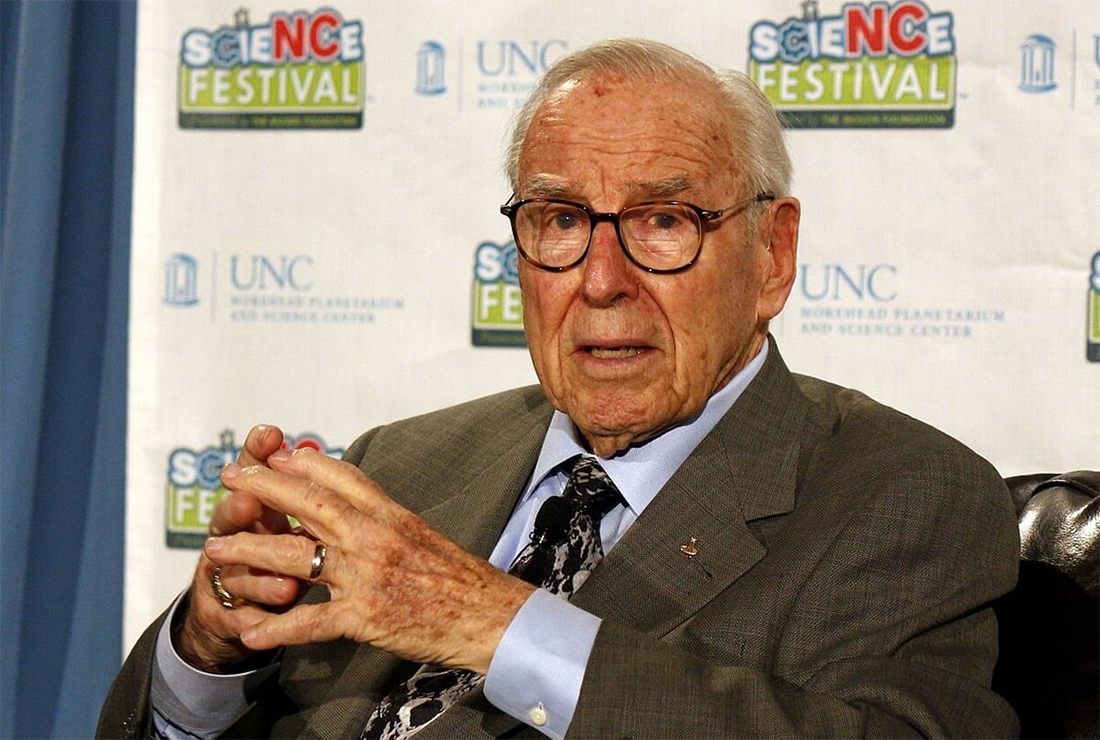
Jim Lovell, the unflappable Apollo 13 commander whose steady leadership brought his crew safely home during one of NASA's most perilous space missions, has died at the age of 97.
Lovell's passing marks the end of an era for the generation of astronauts who helped define America's space race. A veteran of four spaceflights, he was one of only three people to journey to the Moon twice, though he never set foot on its surface. His calm voice during Apollo 13's life-threatening crisis became emblematic of NASA's discipline and resolve.
Born in Cleveland, Ohio, in 1928, Lovell's fascination with rocketry began as a boy, launching homemade models and studying aeronautics. After graduating from the U.S. Naval Academy in 1952, he became a test pilot, honing the precision and cool judgment that would later serve him in space.
Lovell's first mission came in 1965 aboard Gemini 7, where he and Frank Borman spent 14 days in orbit, proving humans could endure extended stays in space. In 1966, he commanded Gemini 12 alongside Buzz Aldrin, mastering techniques that would be vital for future lunar landings.
His most famous mission, Apollo 13 in April 1970, was meant to be the third lunar landing. Two days after launch, an oxygen tank exploded, crippling the spacecraft. Lovell's now-iconic communication to NASA, paraphrased as "Houston, we have a problem", signaled the start of a tense four-day effort to improvise repairs, conserve power, and navigate home. Against daunting odds, Lovell, Jack Swigert, and Fred Haise splashed down safely, hailed worldwide as heroes.
Lovell retired from the Navy and NASA in 1973, later entering the business world and writing the memoir Lost Moon, which inspired the 1995 film Apollo 13, with Tom Hanks portraying him. In later years, he became a sought-after speaker, emphasizing teamwork, preparation, and perseverance in the face of the unexpected.
He is survived by his wife, Marilyn, with whom he shared more than 70 years of marriage, their four children, and numerous grandchildren.
Jim Lovell's life embodied the courage and composure that defined NASA's golden age. His story remains not only one of space exploration but of human ingenuity under pressure, a reminder that leadership, in its truest form, shines brightest when the odds are darkest.