

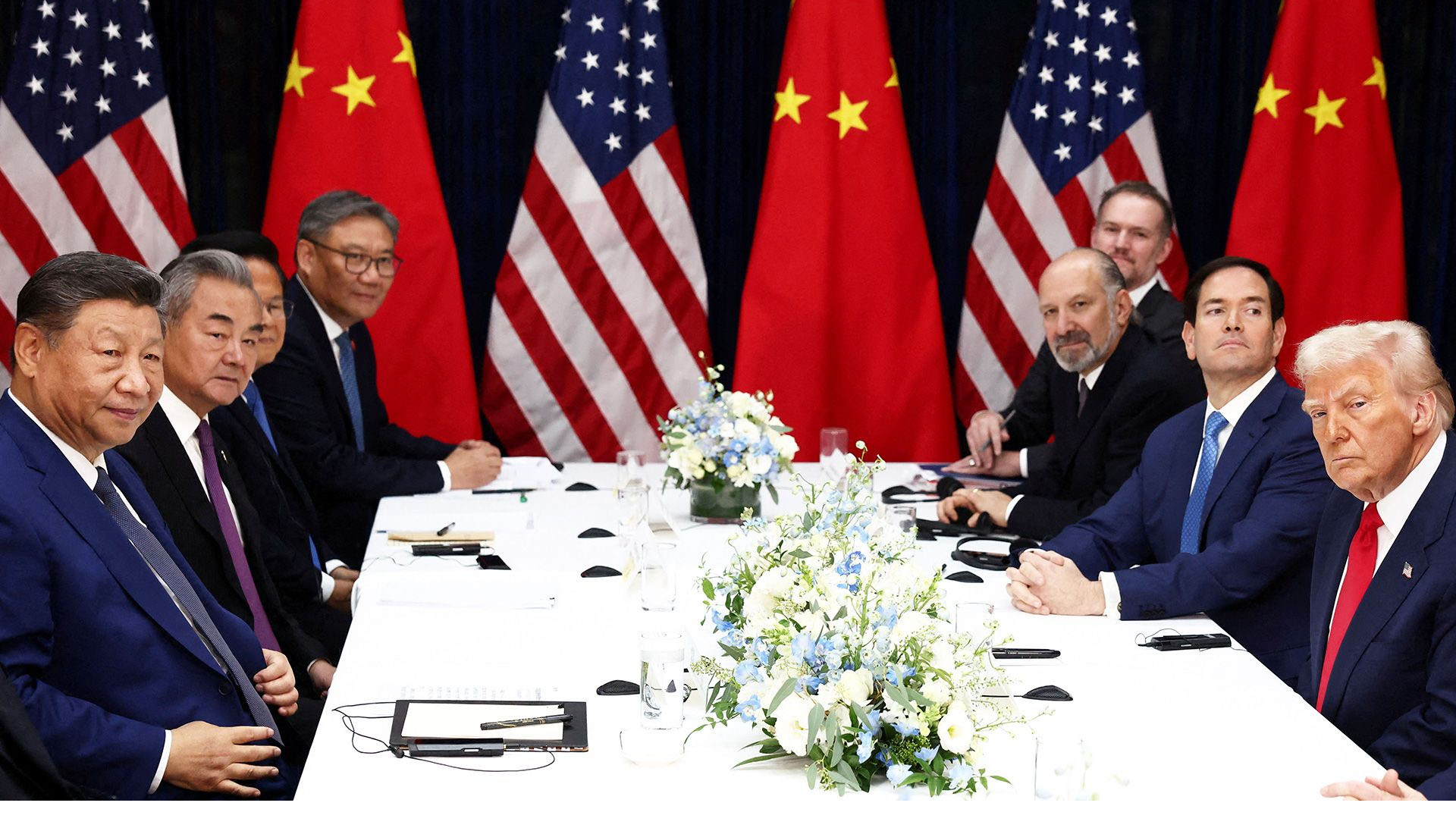
Photo Credit: Getty Images
When veteran intelligence reporter Jeff Stein received a tip in 2016 that Wright USA, an obscure insurer catering to FBI and CIA personnel, had been sold to a Chinese conglomerate, he initially dismissed it as a misunderstanding. The idea that a foreign buyer could quietly acquire a company handling sensitive data for U.S. operatives seemed implausible. But records confirmed it: Fosun Group, a private entity with deep ties to Beijing's leadership, had taken control of Wright USA through a Cayman Islands, routed deal financed by four Chinese state banks.
The revelation exposed a major blind spot in America's investment-screening regime. At the time, U.S. law imposed few barriers to foreign purchases outside traditional national-security sectors. That gap allowed Beijing-linked capital to infiltrate niches Washington had never imagined were vulnerable. Wright USA's databases held personal details of intelligence officers, information that, in adversarial hands, could be exploited for pressure, targeting, or recruitment.
Stein's scoop triggered a swift reaction. CFIUS, the U.S. Treasury panel responsible for reviewing foreign investments, opened an inquiry, and Wright USA was quietly sold back to U.S. owners. Fosun offered no public explanation, and U.S. officials have never disclosed who pushed for the reversal. But the case helped set the stage for the sweeping 2018 overhaul that tightened America's foreign-investment rules.
New research suggests the Wright acquisition wasn't an outlier, it was a signal. AidData, a Virginia-based research lab, has compiled the first comprehensive accounting of China's state-backed spending overseas. Its findings show Beijing has deployed roughly $2.1 trillion abroad since 2000, split between developing and advanced economies. Much of that capital aligns with strategic objectives mapped out in government plans such as Made in China 2025, which targeted dominance in robotics, EVs, semiconductors, and other high-tech industries.
Western governments, AidData argues, misread the pattern as fragmented corporate activity rather than a coordinated state strategy. As evidence mounted, from semiconductor takeovers in Europe to port acquisitions in the Netherlands, investment-screening laws tightened across the G7. Experts now warn against paranoia, but they agree the era of complacency is over. China moved first; others are now scrambling to catch up.