

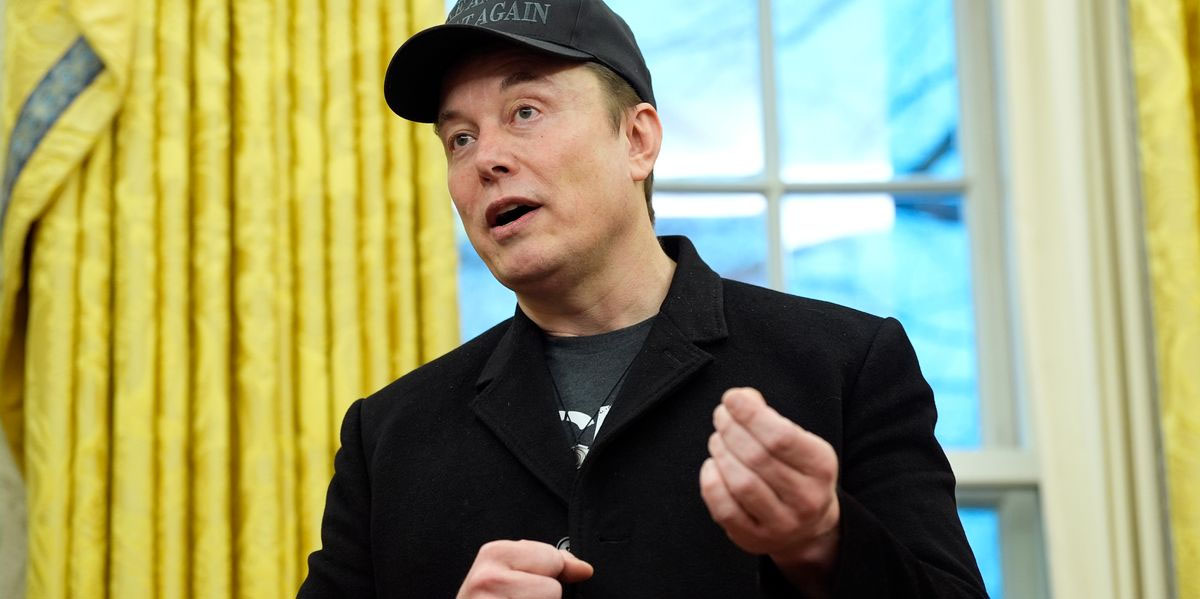
Photo Credit: Getty Images
The Trump administration's high-profile attempt to reinvent federal bureaucracy through the Department of Government Efficiency, better known as DOGE, has quietly collapsed, ending months before its July 2026 mandate and marking an anticlimactic finish to one of the presidency's most-hyped projects.
DOGE was launched with spectacle and celebrity firepower. Elon Musk, fresh off the Trump transition team, was introduced as the unofficial face of the initiative, promising to "delete the mountain" of federal regulations and shrink government agencies at unprecedented speed. The branding leaned into internet culture; the agency's meme-inspired name drew instant attention, while Trump touted it as a revolutionary force that would deliver "a smaller government, with more efficiency and less bureaucracy."
But the momentum didn't last. Office of Personnel Management Director Scott Kupor confirmed earlier this month that DOGE "doesn't exist" as a centralized entity anymore, the administration's first formal acknowledgment that the agency's work has dissolved into other departments. The OPM has now absorbed most of DOGE's functions, leaving little trace of the once headline-dominating project.
Musk had been the initiative's most visible champion, famously lifting a chainsaw above his head at February's Conservative Political Action Conference and calling it "the chainsaw for bureaucracy." Critics saw the moment as theatrical; supporters treated it as a rallying cry. But Musk's time in government was limited by rules for special government employees, and his departure in May, paired with a later feud with Trump over the One Big Beautiful Bill Act, fractured his relationship with the administration.
As DOGE faded, its staff dispersed across Washington. Former members now hold roles in Health and Human Services, the Office of Naval Research, the State Department, and the newly established National Design Studio, which Trump tasked with beautifying federal websites. Their movement underscores how quickly the once-centralized initiative dissolved into the broader machinery it was meant to disrupt.
Though DOGE claimed to have cut tens of billions in spending, the unit released no detailed public accounting, making its true impact difficult to verify. What remains is a project that began with showmanship and ambition, and ended quietly, long before its promise could be fully tested.







