

Photo Credit; Getty Images
The 2026 Grammy Awards unfolded against the backdrop of intensified immigration enforcement under the Trump administration, with many artists using music's biggest night to spotlight opposition to mass deportations and the presence of U.S. ICE in American cities.
From the red carpet to the awards stage at Los Angeles' Crypto.com Arena, immigration emerged as a recurring theme throughout the evening. In the days leading up to the ceremony, organizers and activists urged celebrities to wear protest pins and coordinate messaging across awards-season appearances, resulting in visible and vocal moments during the broadcast.
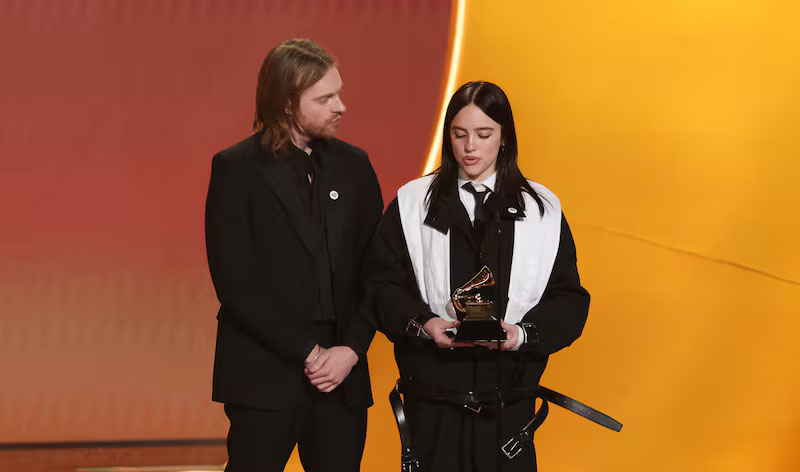
Several artists, including Billie Eilish, Finneas O'Connell and Carole King, wore protest pins while appearing onstage. Even Justin and Hailey Bieber, who rarely engage publicly in American politics, were seen wearing them. Eilish addressed immigration directly while accepting Song of the Year for "Wildflower," stating, "No one is illegal on stolen land."
She later acknowledged uncertainty around the moment, saying, "It's just really hard to know what to say and what to do right now... we just need to keep fighting and speaking up and protesting, and our voices really do matter, and the people matter." During the live broadcast, parts of her speech were censored, though she could be heard saying, "And f--- ICE, that's all I'm gonna say."
British soul-pop singer Olivia Dean, who won Best New Artist, referenced her family background during her acceptance speech. "I'm up here as the granddaughter of an immigrant," she said, adding that immigrants "deserve to be celebrated." Shaboozey echoed similar sentiments while accepting Best Country Duo/Group Performance, saying, "Immigrants built this country. Literally. Actually."
Bad Bunny drew one of the night's loudest reactions while accepting Best Música Urbana Album. "Before I say thanks to God, I'm gonna say: ICE out," he said. "We're not savage, we're not animals, we're not aliens. We are humans and we are Americans." He later added, "The only thing that is more powerful than hate is love."
The visible protests marked a stronger show of solidarity than at other recent awards ceremonies, according to organizers. Public backlash surrounding immigration enforcement has intensified following recent high-profile incidents involving federal agents, contributing to heightened emotions around the issue.
Additional artists, including Jason Isbell, Margo Price, Kehlani and Rhiannon Giddens, wore protest apparel on the red carpet. Bon Iver frontman Justin Vernon said he wore a whistle to honor legal observers documenting federal activity on the ground, explaining, "There's a reason that music exists and it's to heal and to bring people together."
Beyond the Grammys, similar demonstrations appeared at other industry events. Becky G wore an explicit message on her nails during the MusiCares Person of the Year gala, while celebrities at the Sundance Film Festival displayed "ICE OUT" pins.
Maremoto Executive Director Jess Morales Rocketto said artists face varying pressures when deciding whether to speak out. "There's like a million reasons for people not to do it," she said, citing record labels, fashion partnerships and safety concerns. She added that wealth and fame do not eliminate risk, noting that some artists may have undocumented or mixed-status family ties.
As the ceremony concluded, the Grammys had become more than a celebration of music, reflecting a broader cultural response to ongoing immigration debates playing out across the country.