

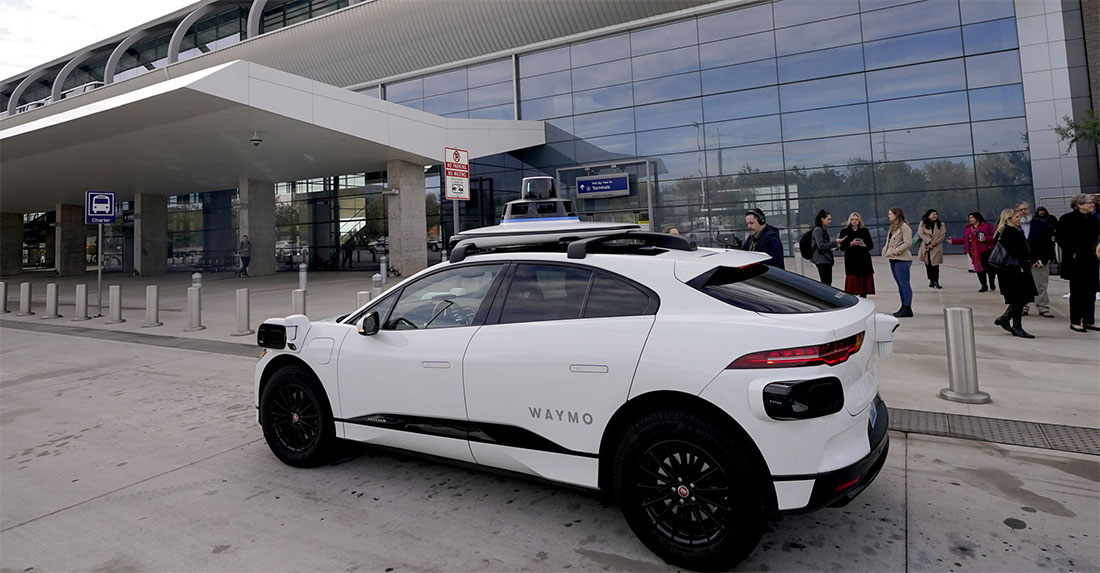
Photo Credit: Getty Images
Waymo has temporarily suspended its driverless vehicles from operating on freeways across the United States following safety concerns raised by California authorities over a series of traffic incidents involving its autonomous taxis.
The decision comes after California's Department of Motor Vehicles imposed restrictions on the company's driverless vehicles, citing what it described as an imminent hazard to public safety. The regulator's concerns include repeated instances of Waymo cars entering active construction zones where workers, equipment and other vehicles were present.
One incident occurred earlier this month on US Route 101, south of San Francisco, when several autonomous vehicles reportedly entered an active road construction area. Although Waymo said no injuries or collisions occurred, the incident raised questions about how reliably the vehicles respond to changing road conditions.
Footage circulating on social media also appeared to show a Waymo vehicle attempting to overtake patrol cars that were deliberately slowing traffic on a San Francisco freeway.
California's restrictions took effect on November 11 and will remain in place until the company demonstrates that it has implemented effective corrective measures to address the problems identified by regulators.
In response, Waymo announced that it would temporarily suspend freeway operations in all its operating markets while reviewing the performance of its vehicles. The company said it was working with state officials to resolve the concerns and restore freeway services responsibly.
The decision represents a significant development for the autonomous vehicle industry, which has promoted driverless technology as a safer alternative to human driving.
Waymo currently operates driverless taxis in 15 American cities, although freeway services have only been available in selected locations, including San Francisco, Los Angeles and Miami. Its vehicles remain permitted to operate on ordinary city streets despite the freeway restrictions.
The company has previously highlighted safety data suggesting its autonomous vehicles are involved in 95 per cent fewer crashes resulting in serious injuries compared with human drivers. However, the latest incidents demonstrate that safety assessments must account for a wide range of unpredictable road situations.
This is not the first time Waymo has faced scrutiny over its technology. In May, the company recalled thousands of self-driving vehicles following a software issue that could cause them to enter flooded roads.
Its vehicles have also attracted attention for unusual behaviour, including an incident in Atlanta in which multiple driverless cars were seen repeatedly navigating a cul-de-sac during the early hours of the morning.
While autonomous vehicles continue to develop, regulators are increasingly demanding evidence that the technology can respond safely to construction work, traffic disruptions and unexpected obstacles.
For Waymo, restoring confidence will depend on demonstrating that its systems can handle these situations consistently, not simply navigating predictable roads.