

Photo Credit; Getty Images
The simmering tension between Ford and General Motors is set to play out on one of the biggest stages in global sport. While both companies have at times downplayed the idea of a direct rivalry in Formula 1, recent comments and strategic moves suggest otherwise. As the 2026 season approaches, the competition between the two American automotive giants is becoming harder to ignore.
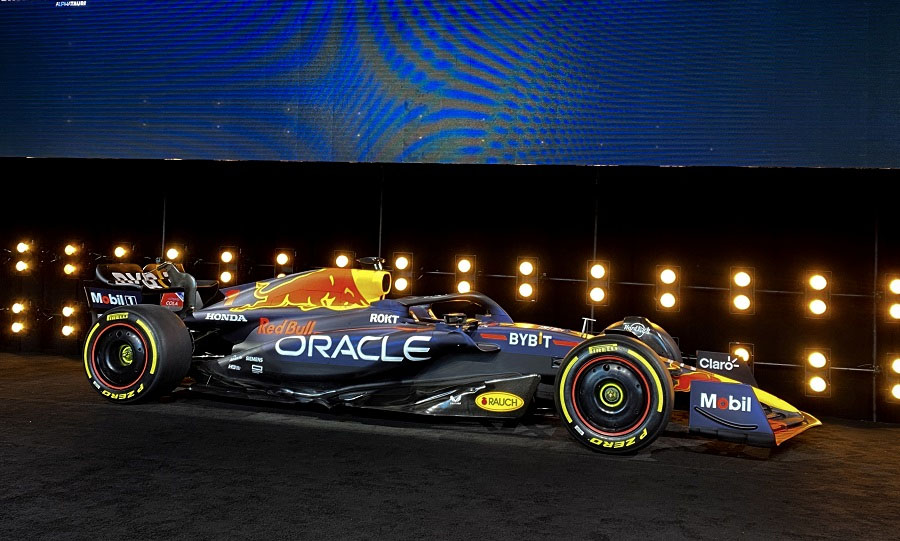
At the center of the conversation is Ford’s partnership with Red Bull Racing and the launch of Red Bull Ford Powertrains. On the other side stands General Motors, backing the new Cadillac F1 Team project. Although the two efforts differ in structure and timeline, both represent serious commitments to Formula 1’s new era.
The rivalry rhetoric first intensified when Cadillac F1 Team CEO Dan Towriss described Ford’s involvement as largely a marketing arrangement with minimal impact compared to GM’s equity stake in its own team. Towriss pointed to the fact that GM has placed the Cadillac name directly on the project and is building toward developing its own power unit before the end of the decade. In contrast, Ford does not hold equity in Red Bull Racing or its powertrain division.
However, Ford Racing general manager Will Ford pushed back strongly against that characterization. He questioned what truly constitutes a marketing exercise, highlighting that Ford has engineers embedded in Milton Keynes working directly with Red Bull and additional teams in Dearborn supporting development. He also pointed to the fact that Cadillac’s initial Formula 1 entries will use a Ferrari power unit before GM’s own engine is ready. For Ford, racing another manufacturer’s engine is not an option it would entertain.
The structure of the two programs does differ significantly. GM’s powertrain project remains several years away from reaching the grid, meaning Cadillac’s early seasons will rely on a customer engine arrangement. Meanwhile, Ford’s partnership with Red Bull is already operational and expanding in scope.
What began as a modest list of collaborative areas has grown into a broader technical relationship. According to Ford Racing global director Mark Rushbrook, early discussions identified specific areas where Ford could contribute and learn. As development progressed, that list expanded. The philosophy has remained consistent. If Red Bull needs support within the framework of the program, Ford will provide it.
One notable area where Ford’s impact has exceeded expectations is advanced manufacturing. Christian Hertrich, Ford’s powertrain chief engineer, revealed that Ford’s cutting edge 3D printing capabilities reduced the manufacturing window for certain prototype parts from sixteen days to just five. That kind of turnaround can be critical in Formula 1, where development speed often determines competitiveness.
Red Bull team principal Laurent Mekies has tempered expectations, acknowledging the complexity of building a new power unit under the sweeping 2026 regulations. For Ford, however, ambition remains clear. The company points to its 2016 Le Mans return as proof that it can compete and win immediately under new rules.
The Detroit season launch underscored the symbolism of the moment. Held just a short distance from GM headquarters, the event highlighted Ford’s intent to make its presence felt. Beyond Formula 1, Ford also used the occasion to emphasize commitments in endurance racing and NASCAR, reinforcing a broader motorsport strategy.
Regardless of ownership structures or timelines, the reality is that in 2026 both brands will share the same Formula 1 grid. When Ford aligned with Red Bull and GM committed Cadillac to the championship, a rivalry became inevitable. On track results will ultimately define the debate, but the battle for American automotive supremacy in Formula 1 has already begun.