

Photo Credit: Getty Images
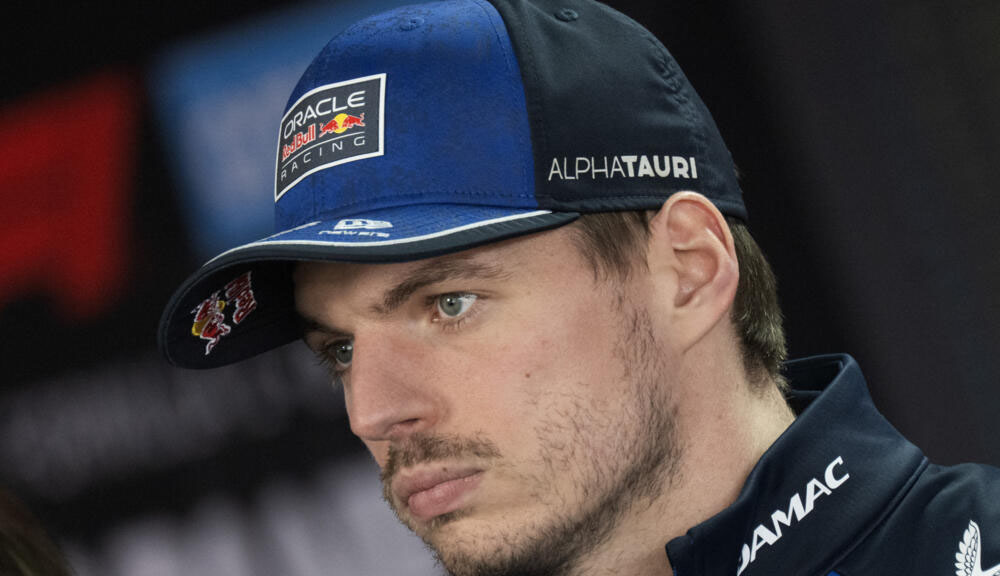
Tension between Formula One drivers and the media is nothing new, but a striking moment unfolded at the Japanese Grand Prix when Max Verstappen refused to begin his press conference until a specific journalist left the room.
The Red Bull driver halted proceedings on Thursday at Suzuka after noticing Giles Richards seated among reporters. Verstappen made his position immediately clear, saying he would not speak while Richards remained present. When asked if he was serious, Verstappen responded bluntly and repeatedly confirmed his stance before instructing the journalist to leave. Only after Richards exited did Verstappen agree to begin the session, stating, “Now we can start.”
The confrontation stems from an exchange that took place at the final race of the previous season in Abu Dhabi. Although Verstappen won that race, he narrowly missed out on the drivers title to Lando Norris by just two points. During the post race press conference, Richards questioned whether Verstappen regretted an earlier incident involving George Russell at the Spanish Grand Prix.
That moment in Spain proved costly. Verstappen appeared to deliberately make contact with Russell’s car, resulting in a penalty that dropped him from fifth to tenth place. The nine points he lost ultimately became decisive in the championship outcome. Richards’ question in Abu Dhabi focused on whether that incident had played a role in the title loss.
Verstappen reacted defensively at the time, suggesting the question ignored the broader context of his season. He pointed out that Formula One championships are decided over many races and hinted that other circumstances had also influenced the final standings. His frustration appeared to linger, resurfacing months later in Suzuka.
According to a source close to Verstappen, his reaction in Japan was not solely about the content of the original question, but also the manner in which it was asked and the perceived tone during the exchange. This suggests that the issue was as much personal as it was professional.
Interestingly, Verstappen had addressed the same incident earlier in the Japanese Grand Prix weekend during an interview. On that occasion, the question was framed differently, and his response was more reflective. He acknowledged that his competitive nature and refusal to accept unfavorable situations contributed to the clash with Russell. While admitting the reaction was “not ideal,” he emphasized that such moments are part of learning and growth as a driver.
The contrast between these two responses highlights how phrasing and delivery can influence interactions between athletes and journalists. In one setting, Verstappen offered insight into his mindset and admitted fault. In another, he shut down the conversation entirely.
Richards has since indicated he will publish his own account of the incident. Meanwhile, the episode has sparked broader discussion about media access, professional boundaries, and how past exchanges can shape future interactions in high pressure environments like Formula One.
At its core, the Suzuka incident serves as a reminder that even in a sport driven by precision and performance, personal dynamics and unresolved tensions can quickly come to the surface.