

Photo Credit: Getty Images
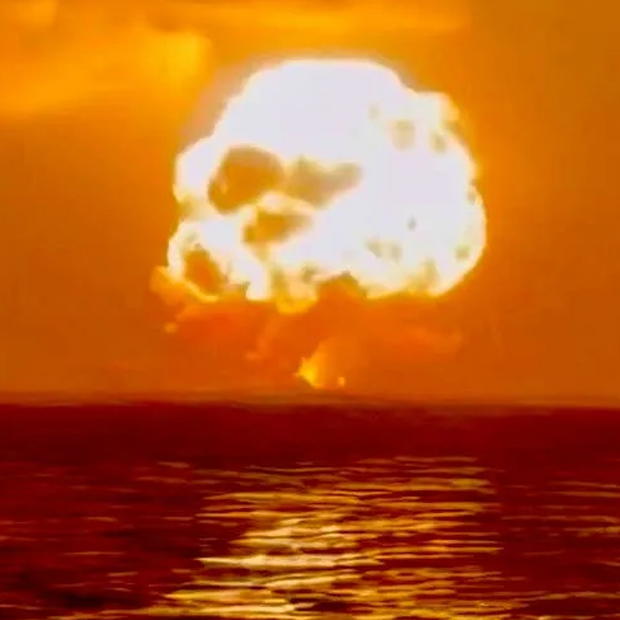
A Blue Origin New Glenn rocket erupted into a massive fireball Thursday evening during a routine engine test at Cape Canaveral Space Force Station in Florida, dealing a significant blow to the aerospace company's launch schedule and NASA's broader lunar ambitions.
The explosion occurred at approximately 9:00 p.m. local time during a hotfire test, a standard procedure in which a fueled rocket's engines are ignited while the vehicle remains secured to the launchpad. No injuries were reported, and Blue Origin confirmed all personnel had been accounted for.
"We experienced an anomaly during today's hotfire test," the company said in a statement posted to X. "It's too early to know the root cause, but we're already working to find it."
Jeff Bezos, the 62-year-old founder of Blue Origin, acknowledged the setback on social media. "Very rough day, but we'll rebuild whatever needs rebuilding and get back to flying," he wrote. "It's worth it."
The rocket was intended to carry 48 Amazon low-Earth orbit broadband satellites on a mission scheduled for as early as June 4. The satellites were not aboard at the time of the explosion.
The blast caused significant damage to the launchpad, the only one Blue Origin has for its New Glenn rockets, with repairs expected to take several months.
The incident carries consequences well beyond Blue Origin's commercial ambitions. NASA, which has contracted the company to support its Artemis III lunar mission currently planned for 2027, confirmed it is investigating the explosion and assessing its impact on upcoming programs.
"Spaceflight is unforgiving," NASA Administrator Jared Isaacman wrote on X. "We will work with our partners to support a thorough investigation of this anomaly."
SpaceX CEO Elon Musk, whose company is Blue Origin's chief competitor, offered a brief message of support. "Sorry to see this," he wrote. "I hope you recover quickly."