

Photo Credit: Getty Images
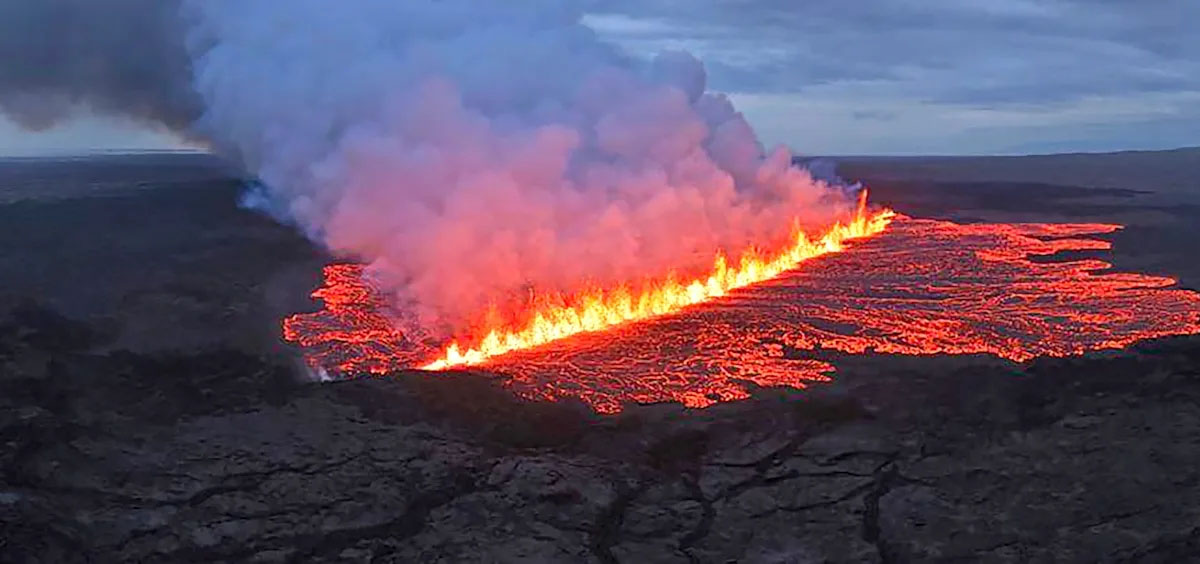
Iceland has recorded its 12th volcanic eruption in four years, as magma broke through the Sundhnukur crater at 3:56 a.m. local time on Wednesday. The Icelandic Meteorological Office confirmed the eruption followed over two hours of seismic tremors on the Reykjanes Peninsula, southwest of Reykjavik.
This latest event, while visually dramatic, is not expected to cause damage. The eruptive fissure stretches about half a mile, with lava flowing southeast through uninhabited terrain. Authorities say no infrastructure lies in the lava's path.
Residents of Grindavik, a fishing town 25 miles from the capital, and visitors to the nearby Blue Lagoon geothermal spa were evacuated ahead of the eruption. The spa, a key tourist attraction, had also been closed during previous eruptions, including one in April. Management has not commented on whether it will reopen immediately. Gisli Olafsson of the Icelandic Red Cross took to social media to assure the public that "there's no threat to people or structures." He noted the eruption, though intense in appearance, is relatively mild in terms of lava output.
The Icelandic Met Office issued a statement noting that southeasterly winds could potentially shift volcanic gases toward areas surrounding Keflavík International Airport. However, as of 6:30 a.m., airport operations remained unaffected.
Eggert Solberg Jonsson, director of recreation and culture for Grindavik, expressed cautious optimism: "We hope our tourism partners will resume activities soon. This has become part of life here."
Since 2021, the Svartsengi volcanic system, which includes Sundhnukur, has produced eruptions at an unusually high rate. Grindavik itself has faced multiple evacuations since November 2023, when the long-dormant system reawakened after 800 years.
RUV, Iceland's national broadcaster, reported scenes of rushed departures from camps and hotels near the Blue Lagoon as seismic swarms triggered emergency protocols. Still, no injuries or damages were reported. Despite the region's frequent activity, Iceland's infrastructure and response mechanisms remain robust. Civil defense units, meteorological monitoring, and evacuation protocols have kept residents and visitors safe throughout recurring incidents.
With no current threat to critical infrastructure or population centers, officials remain on high alert while monitoring possible aftershocks and gas dispersion patterns.