

Photo Credit: Getty Images
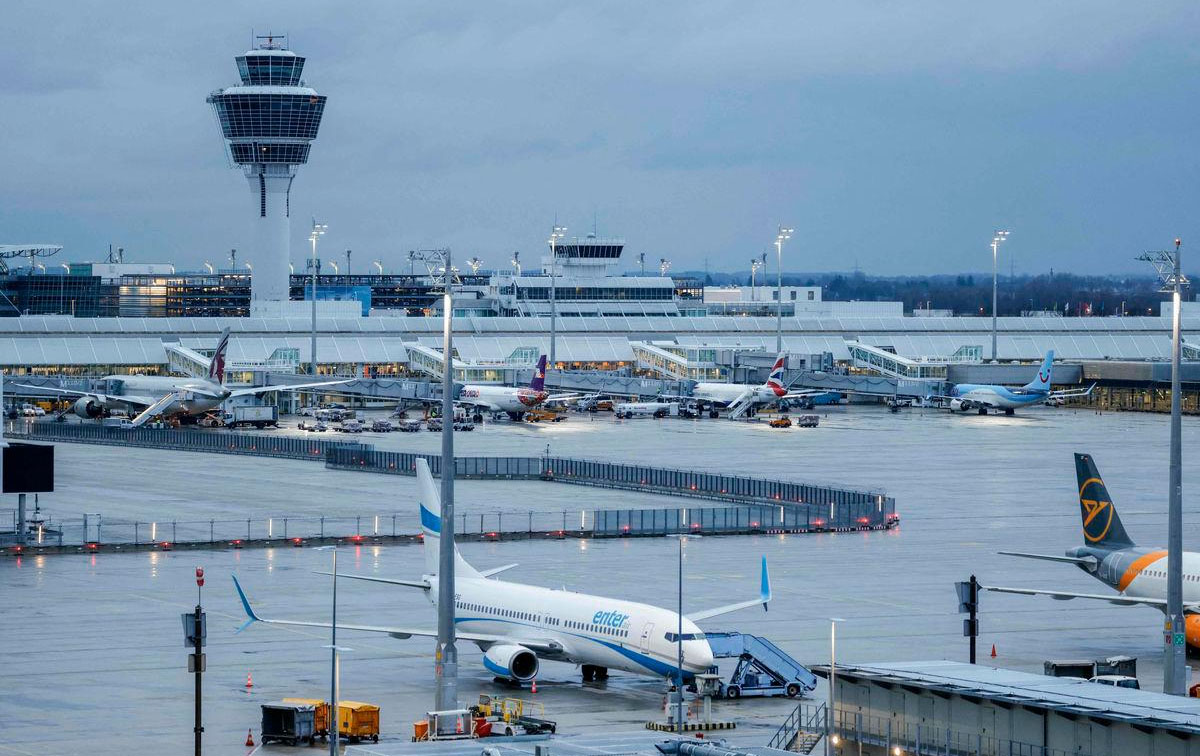
Munich Airport was forced to suspend operations on Thursday evening after drones were spotted near its airspace, grounding 17 flights and affecting nearly 3,000 passengers. Authorities confirmed that an additional 15 flights were diverted to Stuttgart, Nuremberg, Vienna, and Frankfurt as officials scrambled to ensure safety. The sudden disruption left thousands stranded overnight as Germany's second-busiest airport closed earlier than its midnight curfew.
Federal police reported that the drones were first seen around 21:30 local time and again an hour later, though details on their size or origin remain unknown due to the night conditions. A spokesperson noted that investigations were underway, while the airport provided stranded passengers with camp beds, blankets, snacks, and drinks. The disruption coincided with Munich's Oktoberfest, which annually attracts over six million visitors, amplifying the impact on travelers.
Drone-related disruptions have been rising across Europe, prompting leaders to convene in Copenhagen this week. Recent incidents included Russian drones crossing into Poland, MiG-31 jets breaching Estonian airspace, and drone sightings near airports in Denmark and Norway. While Russia has denied any involvement, suspicions have lingered. Addressing speculation, President Vladimir Putin dismissed the accusations with humor during a summit in Sochi, insisting that Moscow played no role.
European airports have struggled with the risks posed by unauthorized drones, which threaten passenger safety and air traffic operations. The Munich shutdown follows similar closures in Copenhagen and Oslo, raising questions about coordinated attempts to destabilize transport hubs. Authorities in Germany continue to assess whether the Munich incident is linked to the wider wave of drone activity across the continent.
As flights resume, passengers remain frustrated by the delays and uncertainty. For many, the ordeal highlights the vulnerability of major airports to modern disruptions. With nearly 3,000 travelers stranded during one of the city's busiest tourist seasons, the episode has reignited debate about Europe's preparedness for drone-related interference. For now, Munich Airport is left managing the fallout of an incident that reflects a growing aviation challenge.