

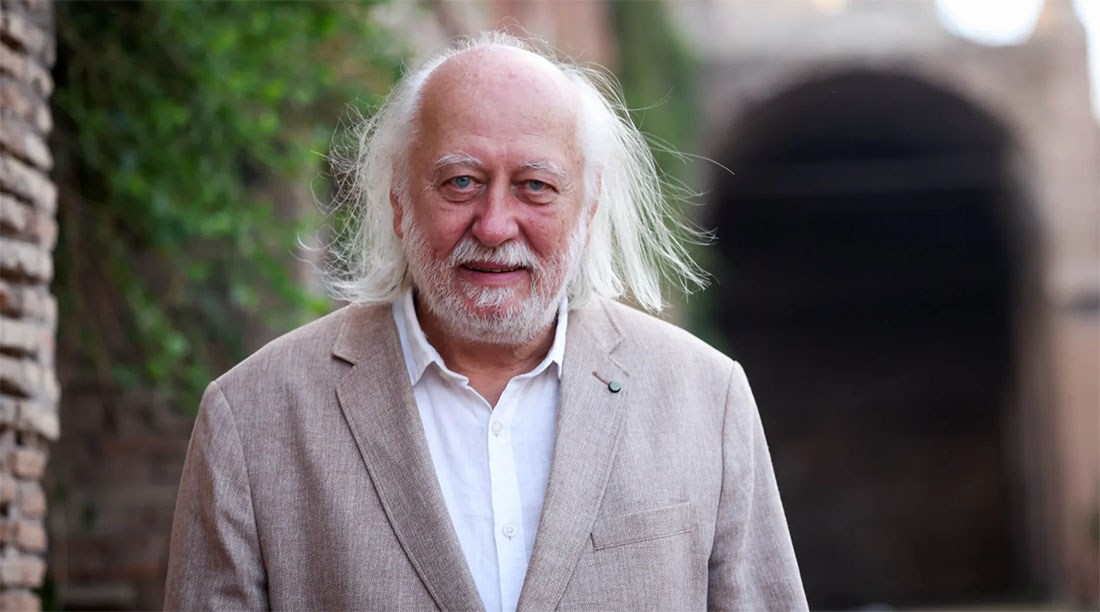
Photo Getty Images
The 2025 Nobel Prize in Literature has been awarded to Hungarian novelist László Krasznahorkai, whose dark, apocalyptic, and deeply philosophical works have earned him global recognition as one of the most challenging yet rewarding voices in modern literature. Announced at a ceremony in Stockholm on Thursday, the Nobel Committee hailed Krasznahorkai "for his compelling and visionary oeuvre that, in the midst of apocalyptic terror, reaffirms the power of art."
Born in Gyula, Hungary, in 1954, Krasznahorkai's writing reflects a haunting sense of loss and existential inquiry rooted in a country that endured Soviet repression. His novels are populated by restless, despairing characters who search for meaning amid chaos. The late Susan Sontag famously described him as "the contemporary master of the apocalypse," a label that perfectly captures his artistic universe: bleak, absurd, and unrelentingly profound.
In his 1989 masterpiece The Melancholy of Resistance, a mysterious traveling circus arrives in a decaying town, bringing with it only the carcass of a giant whale. What follows is an eruption of hysteria and violence that mirrors the collapse of order itself. Critics have interpreted the novel as an allegory for the rise of fascism, though Krasznahorkai resists moral simplicity. As the Nobel Committee observed, his fiction is marked by "absurdism and grotesque excess," forcing readers to confront the madness of existence without the comfort of resolution.
Krasznahorkai's prose is equally distinctive. His famously long, winding sentences (sometimes stretching for pages) create a rhythm that his translator George Szirtes once likened to a "slow lava flow." The author himself once remarked that the full stop "belongs to God," suggesting that human experience is too complex for tidy conclusions. This stylistic daring is evident in his 1985 debut Sátántangó, later adapted into a seven-hour film by Béla Tarr, which Sontag called "enthralling for every minute."
His more recent work, Herscht 07769 (2021), written in a single sentence, has been praised for capturing the absurdities of contemporary Germany, featuring a physicist whose apocalyptic theories lead him to write desperate letters to Angela Merkel.
Hungarian Prime Minister Viktor Orbán congratulated the writer on X, calling the win "a moment of national pride," despite Krasznahorkai's open criticism of his government. The award, which includes 11 million Swedish kronor ($1 million), cements his place among literary greats such as Han Kang and Jon Fosse, past laureates recognized for expanding the boundaries of human expression through art.