

Photo Credit: Getty Images
The story of Kenner Elias Jones is one that seems almost fictional in its scale, ambition and repetition. Yet it is real, documented over decades and now explored again in a new film, Con Jones World’s Best Conman. From a seemingly virtuous choirboy to an international fraudster who deceived churches, political parties, charities and individuals across continents, Jones built a life on lies that rarely stayed buried for long.
His first public deception came in 1969 during the investiture of Prince Charles as Prince of Wales. As a young choirboy, Jones managed to lead the televised procession by convincing a bishop that the other choristers had agreed he should carry the cross. They had not. Fellow choirboy Kevin Doughty later described the act as sly and manipulative. Looking back, many see this moment as an early sign of the confidence and audacity that would define Jones’s life.
While studying at Sheffield Polytechnic in the early 1970s, Jones became involved in politics and was widely seen as charming, generous and engaging. These qualities allowed him to gain trust quickly. But beneath the surface, warning signs were already visible. In 1973, he was convicted in Sheffield of obtaining money by deception. A second conviction followed in 1975 at the Old Bailey, leading to a prison sentence. Periods of psychiatric treatment followed, though none altered his behaviour for long.
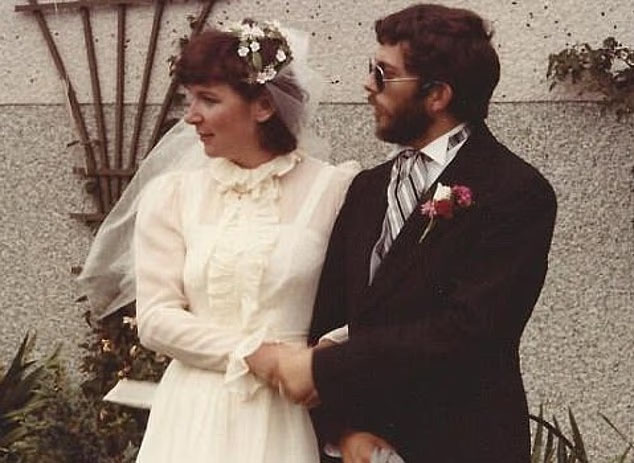
A turning point came in north Wales when Jones met Canadian tourist Lee McKenzie in 1979. She was captivated by his intelligence and charm, and their relationship deepened through letters while he served another prison sentence. Believing his claims of innocence, she married him after his release and brought him to Canada. What followed was a familiar pattern. Jones accumulated debts, forged documents and drained her finances. A psychiatrist warned Lee that Jones had a sociopathic type personality disorder and urged her to leave him. Eventually, she did.
Jones fled to the United States in 1984, posing as a journalist to secure work and ingratiating himself with political organisations. Once again, theft followed trust. This time, he received a nine year prison sentence in Virginia. After his release, he violated parole, returned to Canada and married again, this time to an older woman, Elsie Hager, who became another source of money.
Even deportation orders failed to stop him. Jones repeatedly escaped oversight, moving between countries and reinventing himself as a journalist, political insider, charity worker and later even a medical professional. In Kenya, he falsely claimed to be an Anglican deacon and a retired cardiac surgeon, treating patients despite having no medical training. His work briefly earned praise before journalists uncovered the truth.
Filmmaker Marc Edwards has followed Jones’s story for more than 30 years and describes it as unlike anything he has encountered, even in fiction. In the final chapter of Jones’s life, Edwards tracked him to a care home in Munich, where a frail and elderly Jones expressed regret. Lee McKenzie, meeting him again after decades, chose to believe that his remorse was genuine.
Perhaps the most honest explanation Jones ever gave came years earlier, when he admitted that lying had become instinctive. Sometimes, he said, he knew he was lying and could not stop. Sometimes, he did not even realise he was doing it. That confession may be the clearest insight into a man whose entire life was built on deception, and whose story continues to fascinate and disturb in equal measure.