

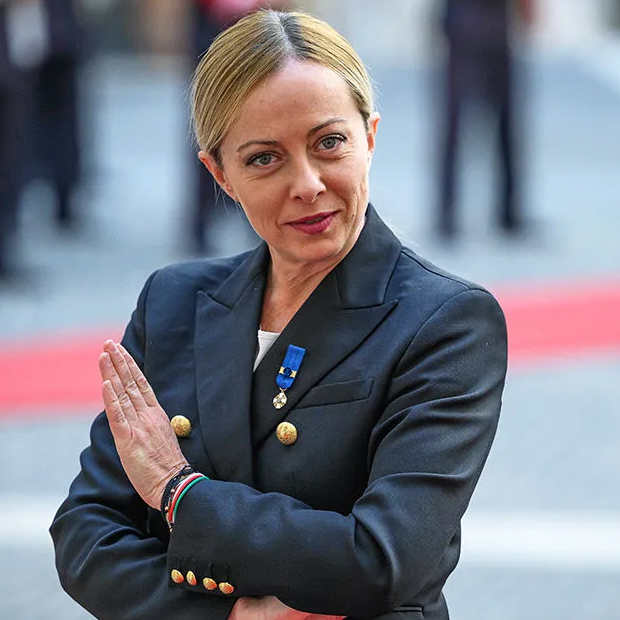
Photo Credit: Getty Images
Italian Prime Minister Giorgia Meloni has raised concern over the misuse of artificial intelligence after fabricated images of her circulated widely across social media, intensifying debate in Italy about digital manipulation.
In comments released on Tuesday, Meloni said several altered photos had been generated using AI tools and presented online as if they were genuine, prompting confusion and criticism from users who assumed they were real.
One of the images, which she later reshared to illustrate the issue, appeared to depict her in a private and inappropriate context. The image had already gained traction online and sparked a wave of negative reactions before its authenticity was questioned.
Meloni addressed the incident with a mix of irony and concern, noting that those responsible had "even made her look better," but stressing that the situation pointed to a far more serious problem.
She warned that artificial intelligence is increasingly being used not just for creative purposes but also to distort reality, mislead the public and target individuals in ways that are difficult to control.
While she said she is in a position to respond and defend herself, she emphasised that many ordinary people subjected to similar manipulation do not have the same protection or visibility.
The prime minister described deepfakes as a form of digital abuse capable of damaging reputations, fueling misinformation and eroding trust in online content.
She urged internet users to adopt a more cautious approach when engaging with viral material, encouraging verification before acceptance and restraint before sharing.
The controversy unfolds against a broader backdrop of growing concern in Italy over AI regulation and online safety, particularly in cases involving non-consensual or defamatory content created with emerging technologies.
Italian authorities have recently stepped up efforts to address such abuses, including legal action and tighter controls on platforms hosting manipulated media.
Meloni also referenced ongoing legal proceedings linked to the misuse of her image in similar cases, highlighting the persistent and evolving nature of the threat.
She cautioned that as AI tools become more advanced and widely available, the ability to distinguish real from fake content is becoming increasingly fragile.
Without stronger safeguards and greater public awareness, she warned, misinformation could spread faster than truth, undermining trust in both politics and public discourse.