

Photo Credit: Getty Images
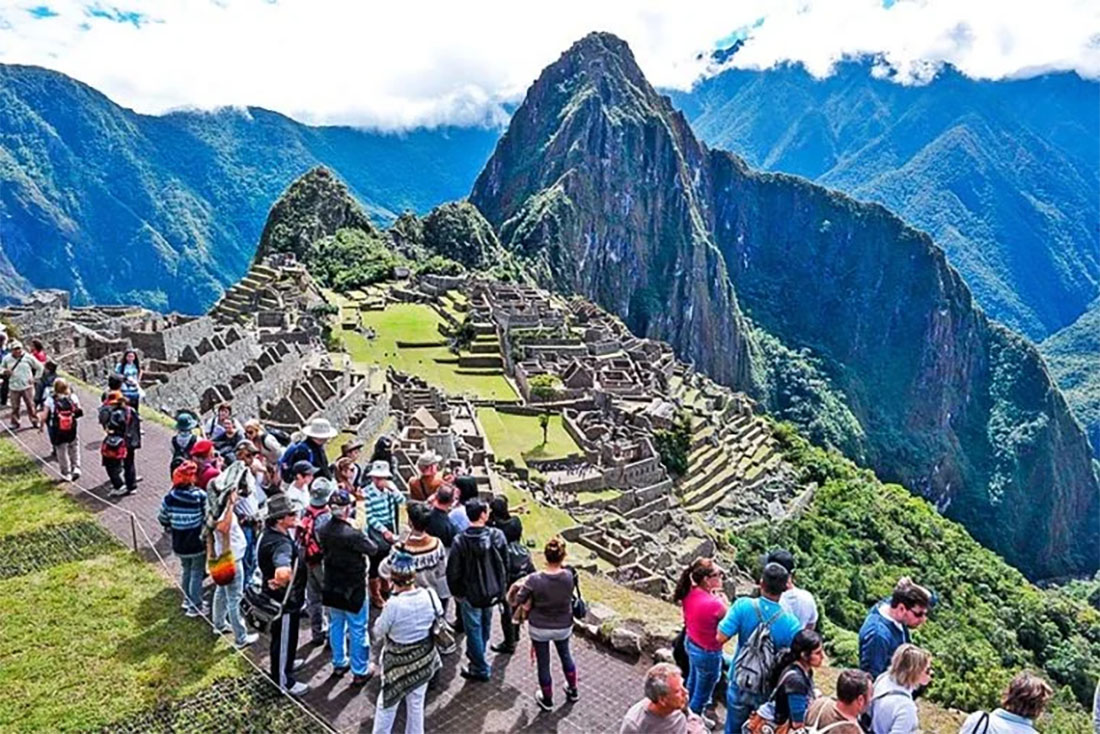
In 2007, Peru's Machu Picchu was celebrated worldwide after being declared one of the New Seven Wonders of the World. That honor came through an unprecedented global vote, with more than 100 million participants securing its place as a marvel of human achievement. Yet today, the iconic Inca sanctuary is under scrutiny as the New7Wonders organization warns of a potential loss of credibility due to overtourism, fragile conservation measures and mounting social conflicts.
The warning is not a mere symbolic statement. According to the New7Wonders director Jean-Paul de la Fuente, the issue represents a "wake-up call" for Peru's leadership. Proposals for long-term management strategies have already been submitted, though their implementation remains uncertain. While the organization stresses that no immediate decision will be made about stripping Machu Picchu of its wonder status, it insists the time has come for genuine reforms.
The Peruvian government has offered mixed responses. The Ministry of Culture emphasized that UNESCO, which recognized Machu Picchu as a World Heritage Site in 1983, is the sole global authority on cultural preservation. They noted that the site has not been placed on UNESCO's List of World Heritage in Danger and highlighted that recent improvements in visitor management were praised at the World Heritage Committee meeting in Paris.
Meanwhile, the Ministry of Commerce and Tourism has faced growing tension with travel associations. Strikes over transportation and ticketing have recently stranded thousands of visitors near Cusco, Machu Picchu's main gateway. The protests, temporarily suspended after negotiations, underscore the difficulty of balancing local economic interests with global heritage preservation.
Beyond these immediate clashes lies a deeper concern: whether the problems facing Machu Picchu are long-standing structural issues that have only now reached critical mass. The challenges are numerous—excessive visitor numbers projected to exceed 1.5 million this year, irregular ticketing practices, inflated prices and insufficient infrastructure. Add to this the competing agendas of institutions and private tourism operators, and the picture becomes one of systemic neglect rather than isolated crises.
For now, Machu Picchu retains its titles as both a UNESCO World Heritage Site and a New Seven Wonder. Yet its future will depend on whether Peru can reconcile tourism with preservation, ensuring that the sacred Inca citadel remains not just a wonder of the world but also a model of responsible cultural stewardship.