

Photo Credit: Getty Images
On Monday, nearly 200 media outlets from 50 countries will stage an unprecedented protest to demand an end to Israel’s killing of journalists in Gaza and to call for international press access to the enclave.
The demonstration, coordinated by Reporters Without Borders (RSF), Avaaz, and the International Federation of Journalists (IFJ), will see newspapers run blacked-out front pages, broadcasters and radio stations interrupt their programming, and online platforms deliberately disrupt their homepages. Organizers say the coordinated action is meant to draw global attention to the escalating toll on journalists covering the war.
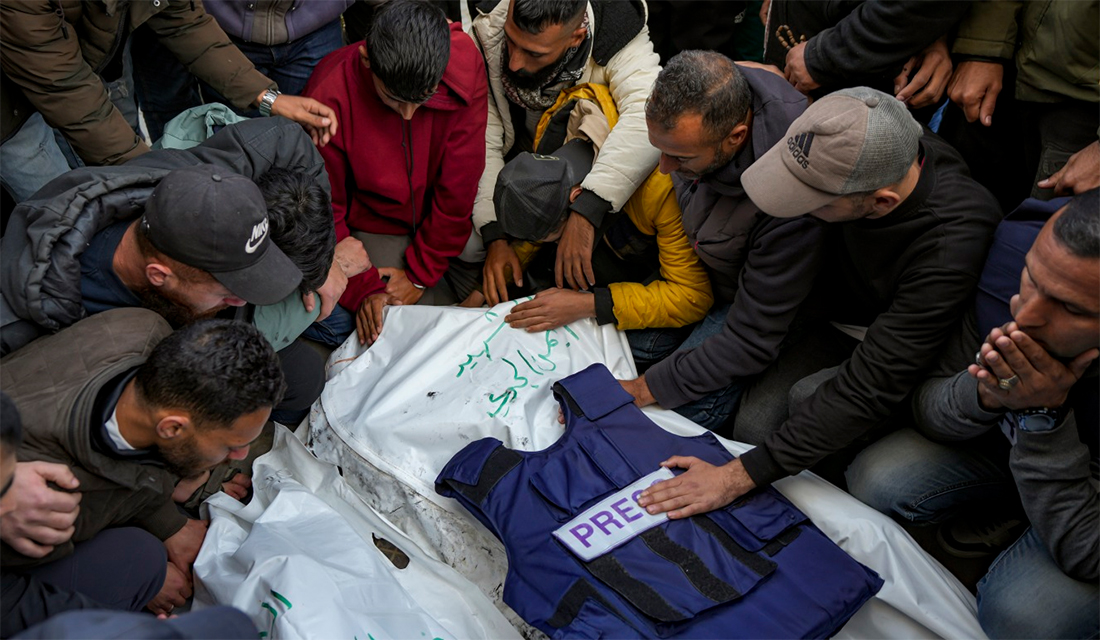
According to IFJ, at least 210 journalists have been killed in Gaza since October 7, 2023, making the conflict the deadliest for media workers in modern history. International journalists have been barred from entering Gaza freely, leaving Palestinian reporters to cover the war under constant threat.
“At the rate at which journalists are being killed in Gaza by the IDF, soon there will be no one left to keep the world informed,” said Thibat Bruttin, RSF’s director general. “This is not only a war on Gaza, it is a war on journalism itself. Journalists are being killed, they are being targeted, they are being defamed. Without them, who will speak of famine, who will expose war crimes, who will denounce genocides?”
The protest comes in the wake of a series of high-profile killings of Palestinian journalists. In early August, five Al Jazeera staff members were killed in an Israeli strike on Gaza City, shortly after Prime Minister Benjamin Netanyahu’s security cabinet approved a plan to take over the city. Among the dead was Anas Al-Sharif, one of Gaza’s most recognized journalists, whose daily reporting brought the humanitarian crisis into millions of homes across the Arab world.
Just last week, another five journalists were killed in a strike on Nasser Hospital in Khan Younis. Witnesses described the incident as a “double tap” attack, a tactic where an initial strike is followed by additional strikes targeting rescuers and reporters who rush to the scene. Exclusive video evidence revealed that after the first missile hit, journalists and civilians moved in to help the injured—only for two near-simultaneous strikes to follow, killing many of them.
Netanyahu later described the hospital incident as a “tragic mishap,” but media watchdogs and rights groups argue that the pattern of repeated strikes on journalists and media facilities cannot be dismissed as accidental.
As Monday’s global protest unfolds, media outlets say they are determined to show solidarity with their colleagues in Gaza and to pressure governments and international bodies to act. For those behind the effort, the message is clear: silencing journalists is silencing the truth.