

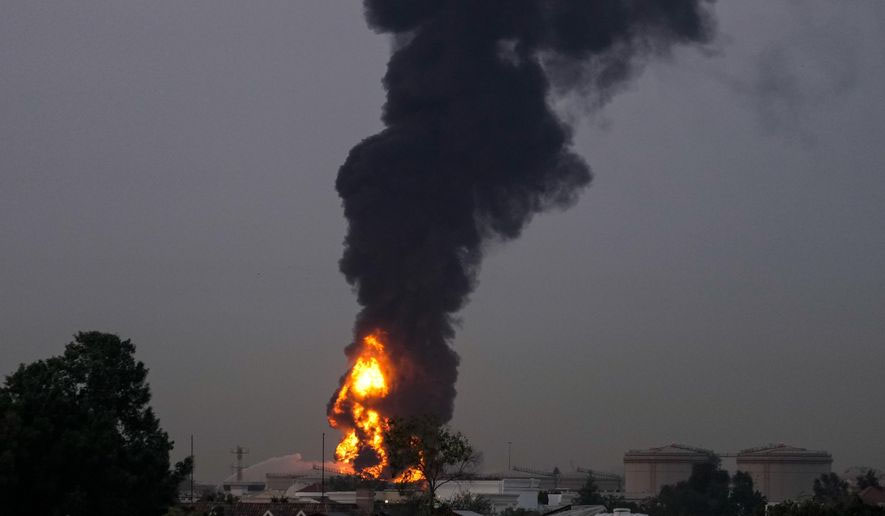
Photo Credit; Getty Images
Drone strikes have disrupted major UAE energy facilities, including the Shah gas field and Fujairah export hub. A tanker sustained damage near the Strait of Hormuz, highlighting growing risks to
shipping routes. Oil prices climbed as markets reacted to tightening supply and escalating regional conflict.
A renewed wave of aerial attacks has struck critical energy infrastructure in the United Arab Emirates, intensifying concerns about prolonged supply disruptions as regional tensions continue to escalate.
Operations at the country's Shah gas field were suspended after a drone strike ignited a fire at the site, forcing an immediate halt to production. Authorities confirmed there were no casualties, but the shutdown adds pressure to an already strained energy sector.
A separate attack triggered a fire in the Fujairah Oil Industry Zone, a vital hub for crude storage and exports located along the UAE's eastern coast. The facility plays a crucial role in bypassing the Strait of Hormuz, making it strategically significant during periods of maritime instability.
Meanwhile, a tanker anchored roughly 23 nautical miles off Fujairah was hit by an unidentified projectile, sustaining structural damage. Maritime officials said the crew remained safe and no environmental spill was reported, though the incident underscores increasing risks to commercial shipping.
The Strait of Hormuz, a key artery for global oil flows, has seen traffic sharply reduced amid ongoing hostilities. The disruption has contributed to a steep decline in UAE oil output, with reports indicating production has dropped significantly in recent weeks.
Energy markets reacted swiftly. Brent crude rose above $100 per barrel, while U.S. West Texas Intermediate also posted strong gains. Prices have surged amid fears that continued attacks could further restrict supply routes and deepen the الأزمة.
Analysts warn that even limited strikes on infrastructure and vessels could trigger wider instability across global energy markets. With the conflict entering a critical phase, attention remains fixed on whether key transit corridors can remain operational.
The situation continues to evolve, with investors closely monitoring developments for signs of further escalation or potential relief in supply pressures.