

Photo Credit: Getty Images
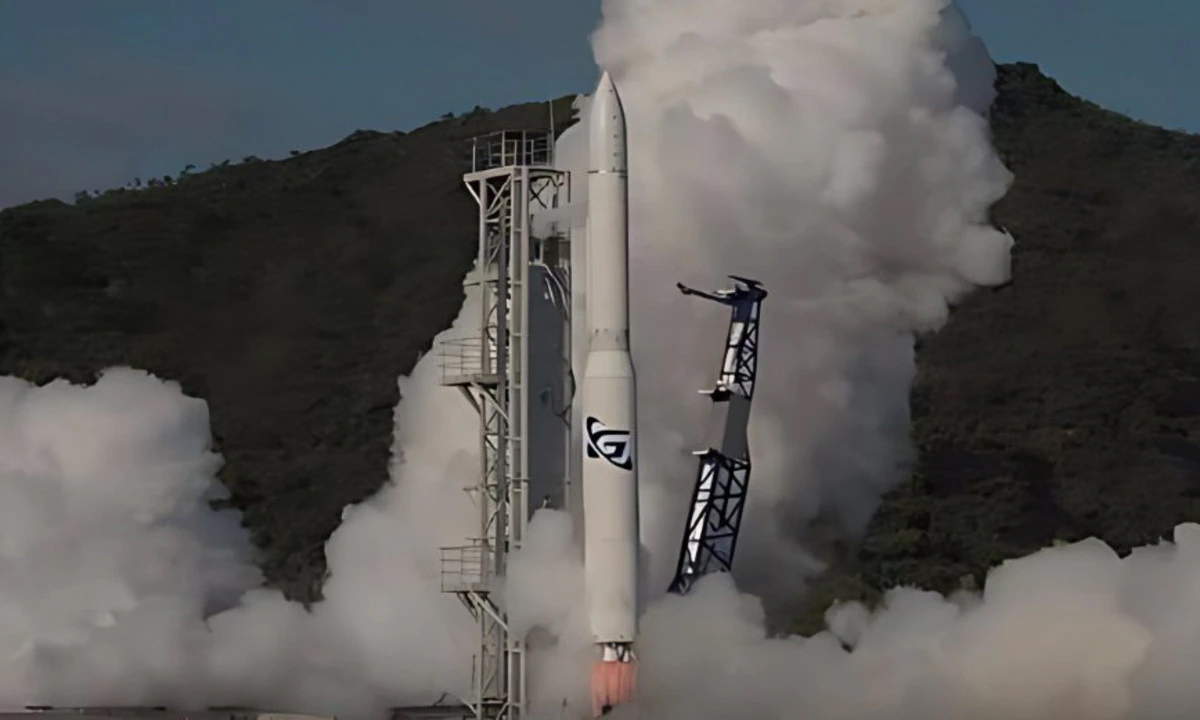
Australia has taken a bold step toward joining the global space industry with the launch of its first Australian-made rocket from home soil. The test flight, conducted by Gold Coast-based Gilmour Space Technologies, marked a milestone despite ending in a crash just seconds after lift-off.
The 14-second flight took place in Bowen, north Queensland, around 8:30am, where spectators gathered on the coast and thousands more watched online via Aussienaut’s YouTube livestream. The 23-metre, 35-tonne Eris rocket, which carried only a symbolic jar of Vegemite, made it into the air briefly before crashing into the ground nearby. Despite the abrupt end, the launch is being hailed as a “major step” in Australia’s ambition to enter the lucrative global space economy.
Gilmour Space Technologies CEO Adam Gilmour expressed optimism in the wake of the short-lived flight. “Off the pad, I am happy,” he posted on LinkedIn. “Of course, I would have liked more flight time, but happy with this.” He later added on Facebook, “For a maiden test flight, especially after an extended 18-month wait on the pad for final approvals, this is a strong result and a major step forward for Australia’s sovereign space capability.”
The company emphasized that the flight, though brief, yielded valuable data that will inform the next stages of rocket development. “This was the first real test of our rocket systems, our propulsion technology, and our spaceport—and it proved that much of what we’ve built works,” Gilmour said. The next-generation Eris rocket is already in production.
Gilmour Space aims to launch small satellites into orbit using hybrid propulsion technology—a lower-cost alternative in high demand by both commercial and government clients worldwide. The company has faced multiple delays due to weather and technical issues, including a last-minute cancellation just a day before the eventual launch due to high winds.
Dr Rebecca Allen of Swinburne University of Technology praised the achievement, noting its potential impact on Australia’s economy and independence in space access. “The launch is a major milestone for the space industry here. It’s huge,” she said. “Once this rocket is more reliable and fully able to undertake launches to lower orbit, it means we are not relying on another country to access space.”
Australia currently lags behind other developed nations in space launch capability. However, with continued investment—including a recent $5 million federal government grant and $52 million in Commonwealth funding for a national space manufacturing network—Gilmour Space is positioning itself to help close that gap.
“Only six nations launch to orbit regularly and just a handful are working to join them—today brings Australia closer to that club,” said Gilmour.