

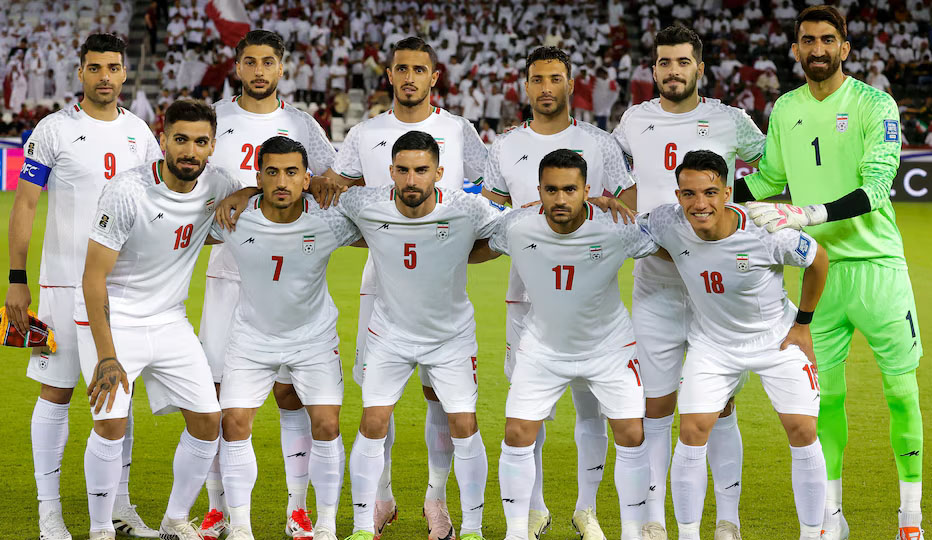
Photo Credit: Getty Images
Iran are not in a position to participate in the 2026 World Cup, according to Minister of Sports and Youth Ahmad Donyamali. The team was scheduled to play group stage matches against New Zealand, Belgium, and Egypt in Los Angeles and Seattle this June. However, participation has been ruled out following the escalation of regional conflict, triggered by US and Israeli strikes that killed Supreme Leader Ayatollah Ali Khamenei and subsequent retaliatory attacks by Iran.
Earlier on Wednesday, Fifa president Gianni Infantino said US President Donald Trump had told him Iran are "welcome to compete" at this summer's finals.
He said: "We all need an event like the Fifa World Cup to bring people together now more than ever, and I sincerely thank the President of the United States for his support, as it shows once again that football unites the world."
But in an interview with the IRIB Sports Network on Tuesday, Donyamali said: "Given that this corrupt government has assassinated our leader, under no circumstances do we have the appropriate conditions to participate in the World Cup.
"Our boys are not safe, and conditions for participation do not exist."
Mehdi Taj, the head of Iran's Football Federation, had also questioned their ability to participate in the World Cup, following six members of Iran's women's national team receiving "humanitarian" visas from Australia over concerns for their safety.
The remaining Iranian players left Australia on Tuesday after the team's elimination from the Asian Cup.
Taj said: "Given the problems created for the female footballers, if the World Cup outlook is like this, no sound mind would accept sending the team to the US."
If Iran does withdraw from what would be its fourth consecutive World Cup, Fifa's regulations give the governing body discretion to choose a replacement, but it is unclear who that would be.
Despite the Iranian sports minister's comments, it is still too early to rule the national team out of the World Cup.
The Football Federation Islamic Republic of Iran ultimately has the final say, regardless of what the minister might say.