

Photo Credit: Getty Images
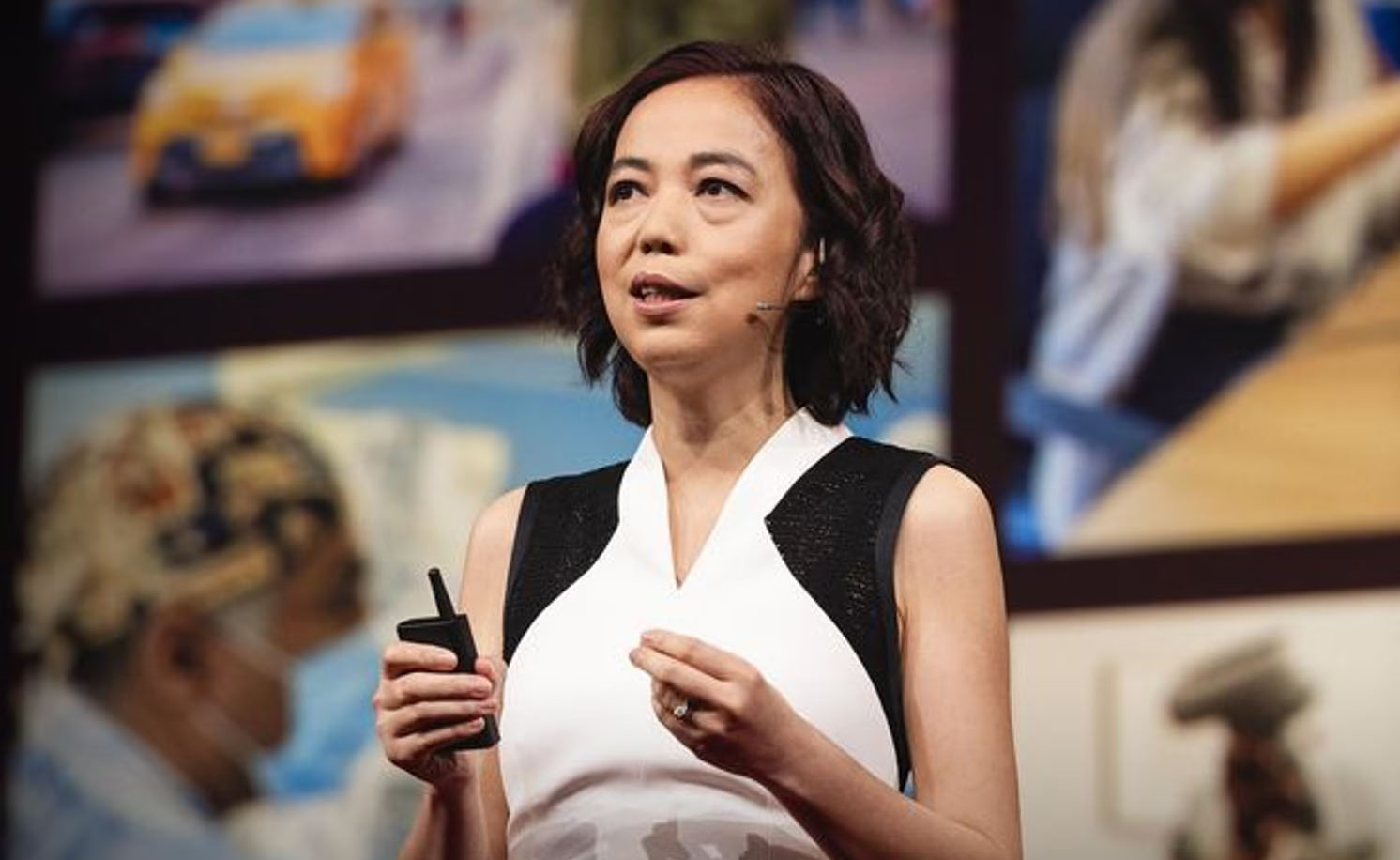
Professor Fei Fei Li, often referred to as the “godmother of AI,” says she is “proud to be different” as she becomes the only woman among seven pioneers of artificial intelligence being honoured with one of the world’s most prestigious engineering prizes.
Today, at St James’s Palace, King Charles III will present the 2025 Queen Elizabeth Prize for Engineering to Professor Li and six other trailblazers, Professor Yoshua Bengio, Dr Bill Dally, Dr Geoffrey Hinton, Professor John Hopfield, Nvidia founder Jensen Huang, and Meta’s chief AI scientist Dr Yann LeCun. Together, they are recognised for their pioneering contributions to modern machine learning, which is the foundation of today’s AI revolution.
For years, the trio of Hinton, Bengio, and LeCun have been hailed as the “godfathers of AI,” following their joint 2018 Turing Award win. Fei Fei Li, however, stands alone as the only “godmother,” a title she has learned to embrace. “I would not call myself godmother of anything,” she told the BBC. “But when people began calling me that, I paused and realised that rejecting it might deny an opportunity for women scientists to be recognised the same way men often are, because men are easily called godfathers or founding fathers. For all the young women I work with, and the generations of girls to come, I’m okay now accepting this title.”
Born in China and raised in the United States after emigrating as a teenager, Professor Li has become one of the most influential figures in AI. She is currently the co director of Stanford’s Human Centered AI Institute and the co founder and CEO of World Labs, and it is her groundbreaking work on ImageNet that earned her a place among the field’s greatest innovators.
ImageNet, a massive visual database created by Li and her students, transformed computer vision by teaching machines to “see” and recognise objects. This project opened what she calls “the floodgate of data driven AI,” setting the stage for the explosion of AI applications seen today, from facial recognition to autonomous vehicles.
Looking ahead, Professor Li believes the next frontier for AI lies in its ability to interact with the physical world. “This ability is innately important and native to animals and humans,” she said. “If we can unlock it in AI, it could superpower humans in many ways, including creativity, robotic learning, design, and architecture.”
The ceremony marks the first time all seven laureates have come together. Yet not all of them see the future of AI the same way. Dr Geoffrey Hinton has repeatedly warned that AI could pose an “extinction level threat,” while Professor Yann LeCun argues that such fears are exaggerated. Professor Li, however, takes a balanced stance, calling for “a science based, pragmatic approach.”
“We’re used to disagreement,” she said. “A topic as profound as AI requires healthy debate and public discourse. Both extremes concern me. I’d like our communication of AI to be more grounded in facts and science instead of extreme rhetoric.”
The Queen Elizabeth Prize for Engineering, awarded annually, celebrates innovations that have profoundly benefited humanity. Past winners include Sir Tim Berners Lee, inventor of the World Wide Web.
Lord Vallance, chair of the Queen Elizabeth Prize for Engineering Foundation, praised the laureates, saying their achievements “represent the very best of engineering,” and “demonstrate how engineering can both sustain our planet and transform the way we live and learn.”
As the only woman in a field often dominated by men, Fei Fei Li’s story is not just about technology, it is about representation, perseverance, and the quiet power of being “different” in a world driven by innovation.