

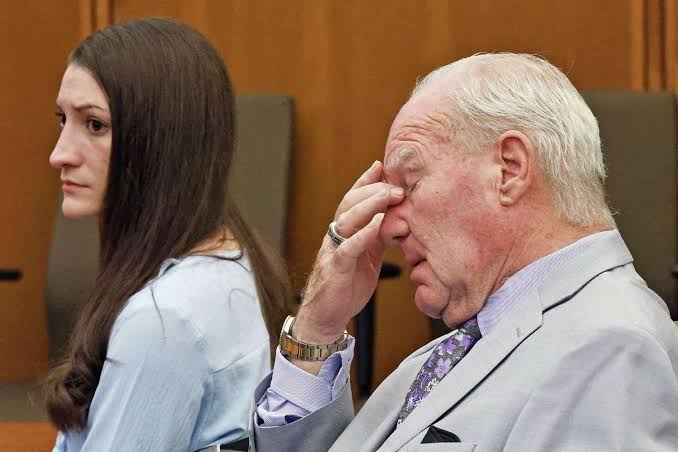
Speaking to PEOPLE, attorney Kevin Reddington said Clancy, 36, remains at Tewksbury Hospital, a state psychiatric facility, where she continues to receive care.
"She's not a happy person, obviously," Reddington said. "She's living in her own tragic world. It's constant. She's a very sad person and understandably so."
Clancy is facing murder charges in connection with the deaths of her three children, Cora, 5, Dawson, 3, and Callan, 8 months. The children were found dead at the family's Duxbury, Mass., home in January 2023 with exercise bands around their necks.
Her five-week trial ended in a mistrial on Sept. 4 after jurors were unable to reach a unanimous verdict following more than six days of deliberations.
Prosecutors argued that Clancy intentionally killed her children. Her defense maintained that she was not criminally responsible because she was experiencing postpartum psychosis and had been overmedicated with psychiatric medication at the time.
Clancy also attempted suicide by jumping from a second-story window after the deaths, leaving her paralyzed from the waist down.
Reddington has continued to criticize the psychiatric treatment Clancy received, blaming what he described as inadequate care and medication for her condition.
During a hearing on Tuesday, Sept. 29, he argued that prosecutors had failed to present sufficient evidence showing that Clancy killed her children.
"I ask the court to look back at the evidence presented and ask yourself, where is the evidence that she did this?" Reddington said.
He also told PEOPLE that Clancy had no memory of the killings when she arrived at the hospital and argued there was no evidence she confessed, only that she was told what had happened.
Prosecutor Shannan Buckingham challenged those arguments, saying they differed from the defense's position during the trial. Buckingham argued that prosecutors had presented sufficient evidence and noted that mental illness does not automatically eliminate criminal responsibility.
Clancy's case has drawn national attention, particularly surrounding postpartum psychosis and mental health treatment.
According to Reddington, Clancy is aware of the public support she has received and draws strength from it. He said supporters sometimes gather outside Tewksbury Hospital when she leaves for court.
Reddington also said Clancy's parents visit her almost daily. Despite her circumstances, he described her as resilient and accepting of her situation.
"She just lives in a state of constant sadness, but she's very resilient and accepting," he said. "She just moves forward."