

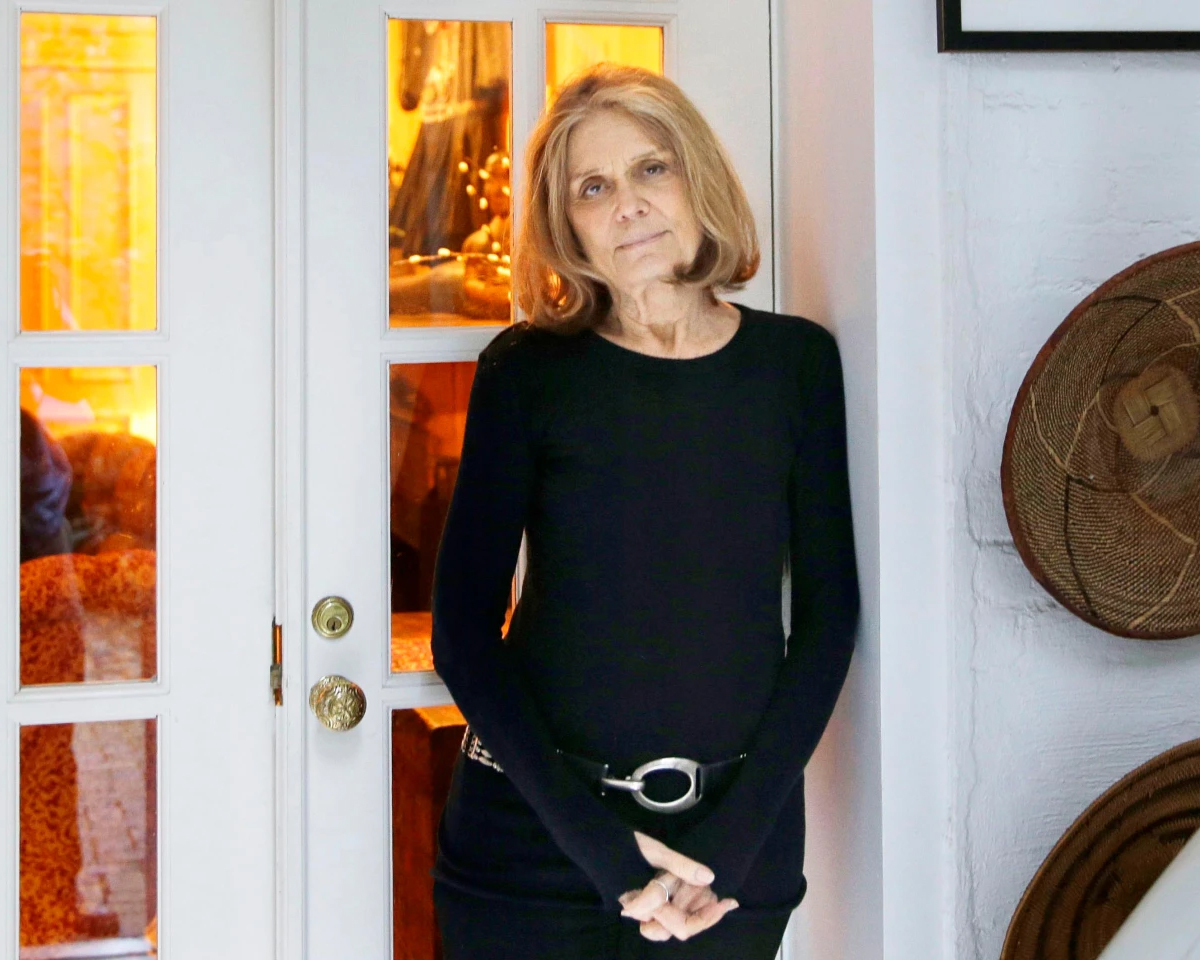
Photo Credit: Getty Images
Gloria Steinem, the celebrated author and activist who became one of the most visible symbols and potent voices of the U.S. women’s movement and a fierce advocate for feminist causes for over six decades, has died. She was 92.
With her trademark streaked hair parted down the middle and large aviator glasses, Steinem, a co-founder of Ms. Magazine, was a hugely recognizable presence wherever she went. And she went everywhere: Much of her life as an advocate was spent on the road, speaking at college campuses and community centers, at rallies and marches.
“You can’t do it on the phone or on the web,” she told The Associated Press in a 2015 interview. “You have to be there with all five senses. It should be obvious that people can’t empathize with each other unless we’re in the same room.”
Steinem, who had been in declining health, died Wednesday at her home in New York City, according to a post on her social media page. She had recently completed a memoir, to be released this fall.
Gloria’s greatest gift was her ability to listen to others, to make others feel seen and heard,” the post said. “Her words, actions, and example gave people permission to be their truest selves.”
Though Steinem had recently become more frail physically, her wit and humor remained totally intact. Her friend and fellow activist, Abigail Disney, said she’d visited Steinem’s Manhattan home a bit over a week ago, as those close to her gathered by her side. “She was just as funny and just as sharp as I have ever known her,” Disney said. And, she said, generous.
“Everything Gloria did was rooted in kindness,” Disney said. “It flowed through her political activism.”
Steinem changed her career path after a start as a journalist
Steinem began her career as a journalist, notably reporting in 1963 on degrading conditions in Hugh Hefner’s Playboy empire — an undercover assignment she came to later regret. She credits a meeting six years later, where women spoke out in favor of abortion rights, with changing her career path.
“That speak-out was the beginning of activism for me,” Steinem, who had undergone a secret illegal abortion herself at age 22, told the AP in an email in 2022, reflecting on the reversal of Roe v. Wade. “Either our control over our own bodies is equal, regardless of sex or race, or we’re not living in a democracy.”
Those who watched Steinem denounce discrimination for so many years likely never suspected that she’d had to overcome a deep fear of public speaking. She would have simply stuck to writing, she said, if only editors at the time had been willing to let her write about the women’s movement.
But they weren’t interested, she told the AP in 2015. “So I ended up going out and speaking, which was my nightmare,” she said. “I mean, I was terrified. But I’m grateful, even though I still get scared even now.”
Steinem’s visibility endured throughout her life
Time hardly slowed Steinem down; through her 80s, she was traveling the globe and speaking out on issues of importance to her. These included everything from genital mutilation to Korean reconciliation, but it was equality for women that took precedence. “Being a feminist means that you see the world as whole instead of half,” she once said. “It shouldn’t need a name, and one day it won’t.”