

Photo Credit: Getty Images
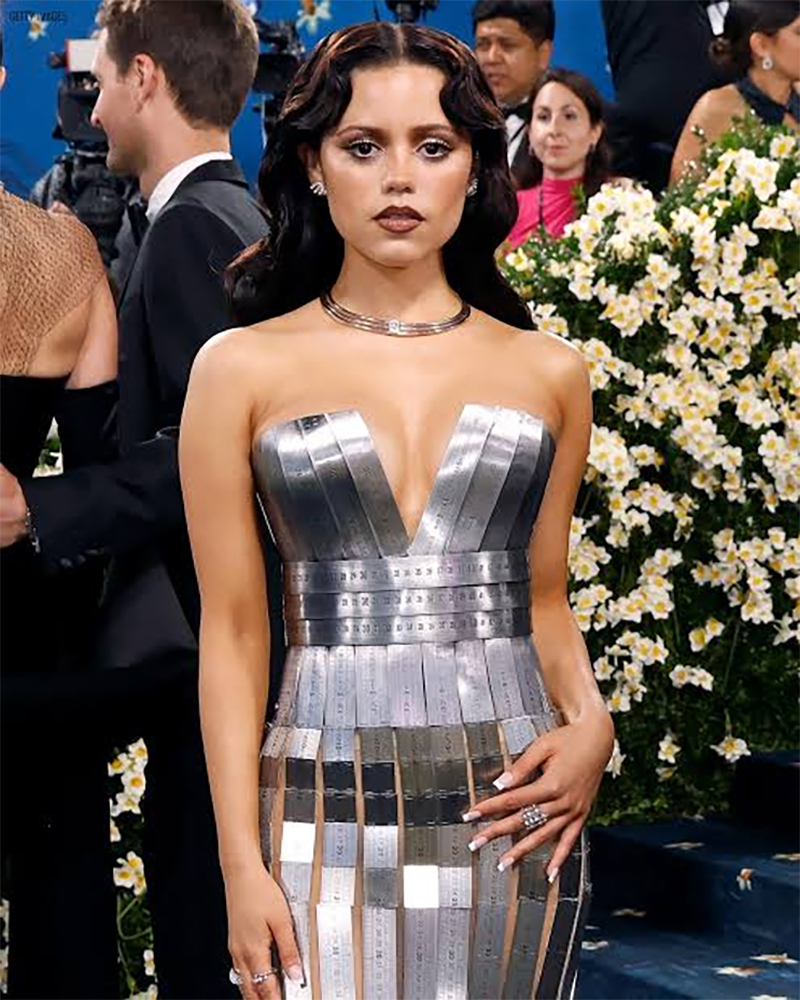
Hollywood star Jenna Ortega has taken futuristic fashion to a new level, arriving at the New York premiere of Klara and the Sun in a striking gown crafted almost entirely from metal components.
Designed by Elias Matso, the unusual outfit featured a fitted bodice, a fringe skirt and a distinctive W shaped bustier. Rather than relying on conventional fabric, the creation used hand cut steel flat and spiral boning, structural elements more commonly associated with corsets and hoop skirts.
The result was an industrial yet carefully constructed look that appeared to transform Ortega into a walking sculpture. The dress also echoed the themes of her latest film, an adaptation of Kazuo Ishiguro's 2021 novel, in which she plays Klara, a solar powered robot known as an Artificial Friend.
Speaking to People magazine, Ortega praised Matso's work, explaining that the designer had been saving the dress for her. She described it as a perfect choice for the film, highlighting the connection between the character's artificial nature and the gown's futuristic appearance.
Ortega's look arrives at a time when designers are increasingly exploring the relationship between fashion, technology and humanity. Although clothing inspired by machines may appear experimental, the concept has a long history in high fashion.
One notable example is Thierry Mugler's 1995 Machinemensch suit, inspired by the iconic robot costume worn by Brigitte Helm in Fritz Lang's 1927 film Metropolis. The sculptural design recently returned to the spotlight when Zendaya wore a vintage version, demonstrating the lasting appeal of mechanical fashion.
Schiaparelli also explored technology through its 2024 spring couture collection, incorporating discarded electronic materials, including circuit boards and old Nokia mobile phones. Creative director Daniel Roseberry treated the salvaged components as unconventional fabrics, turning technological waste into luxury fashion.
Alexander McQueen made another memorable statement in 1999 when robotic arms sprayed paint onto a white dress worn by model Shalom Harlow during a runway presentation. The performance blurred the boundaries between fashion, machinery and artistic experimentation.
Despite their futuristic appearance, these creations often depend on traditional craftsmanship and human creativity. Matso's gown was assembled through a demanding process involving repeated trials, rebuilding and careful manual work.
The designer acknowledged the challenges involved, including failed experiments and the assistance of others who helped bring the design to life. Ortega similarly emphasised that the dress was handmade and required considerable effort.
That human element is central to the appeal of technological couture. Rather than suggesting that machines have replaced designers, the garments demonstrate how unusual materials and imaginative construction can expand fashion's creative possibilities.
With her latest appearance, Ortega has joined a long line of stars using red carpet fashion to reflect the stories they tell on screen. Her metallic ensemble proves that even the most futuristic designs can remain rooted in human skill, artistic vision and painstaking craftsmanship.