

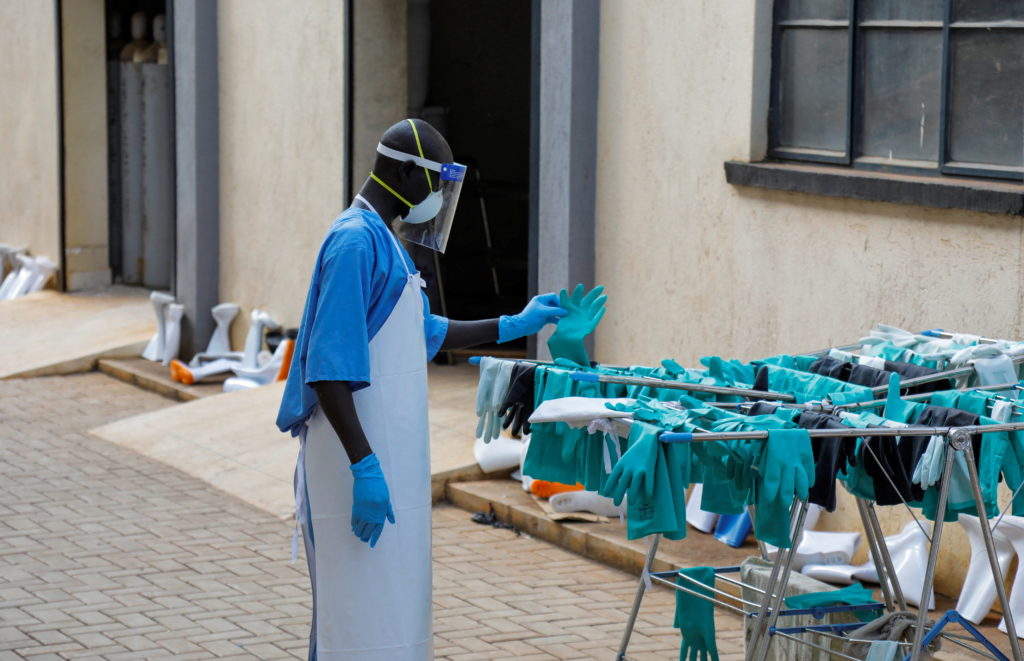
Photo Credit: Getty Images
Nigeria has confirmed an Ebola case in a female patient who travelled from Uganda to Abuja, prompting health authorities to intensify surveillance and begin tracing people who may have been exposed to the virus.
Health Minister Muhammad Ali Pate announced that laboratory tests had confirmed the diagnosis. The patient has been isolated in a hospital in Abuja, where she is receiving medical care as officials work to prevent possible further transmission.
Authorities have identified 44 close contacts of the woman as part of efforts to monitor potential infections. The development makes Nigeria the first West African country to report a case linked to the ongoing Ebola crisis in East Africa, raising concerns about the possible spread of the disease across borders.
Ebola is a rare but potentially fatal viral disease. Symptoms can include fever, vomiting and diarrhoea, while severe cases may progress to organ failure. Some patients also experience internal or external bleeding.
The virus spreads through direct contact with the bodily fluids of an infected person, including blood and vomit. Health experts therefore emphasise early identification, isolation of suspected cases and careful monitoring of people who have been exposed.
The latest case comes amid an outbreak involving the Democratic Republic of Congo, Uganda and Kenya. Figures cited by the European Centre for Disease Prevention and Control indicate that the outbreak in the Democratic Republic of Congo has resulted in thousands of deaths and more than 9,500 reported cases.
The outbreak was linked to the Bundibugyo species of Ebola, a relatively rare strain for which there is no approved vaccine or specific treatment, although trials are underway.
Uganda also reported infections and deaths before declaring itself free of the disease in August, following the discharge of its last patient. Kenya has reported at least nine infections linked to the wider regional situation, according to the information provided.
The spread of the virus has prompted international concern. On Monday, the United States advised its citizens to reconsider travel to Kenya because of health risks and raised its travel advisory level for the country.
Nigeria has responded by strengthening disease surveillance and issuing public health guidance through the Nigeria Centre for Disease Control. Travellers arriving from countries with active or relevant Ebola transmission may be required to complete health declaration forms, while those arriving from other countries are currently exempt.
The agency has also urged travellers to remain vigilant and seek medical attention promptly if they develop symptoms consistent with Ebola.
Nigeria has previous experience managing the disease. In 2014, the country successfully contained an outbreak that caused at least eight deaths, demonstrating the importance of rapid detection, coordinated medical responses and contact tracing.
Health officials now face the task of preventing another outbreak while the regional situation remains concerning. Identifying exposed individuals, monitoring their health and ensuring that suspected infections receive prompt attention will be critical to limiting the risk of further transmission.
Although the confirmed case has triggered heightened vigilance, the identification of contacts and the patient's isolation form part of the measures designed to contain the threat before it spreads further.