

Photo Credit: Getty Images
Bangladesh's garment industry is facing renewed disruption after workers demanding higher minimum wages staged protests that forced nearly 150 factories to close across some of the country's major clothing production centres.
The demonstrations affected industrial areas including Savar, Ashulia and Gazipur, where thousands of workers walked away from production lines to demand better pay amid rising living costs. Their main demand is for the monthly minimum wage to increase from 12,500 taka to 30,000 taka, an amount equivalent to approximately $250.
Workers argue that the existing wage is insufficient to cover essential expenses, including food, housing and transport. Their demands have placed pressure on factory owners and government officials as negotiations over a revised wage structure continue.
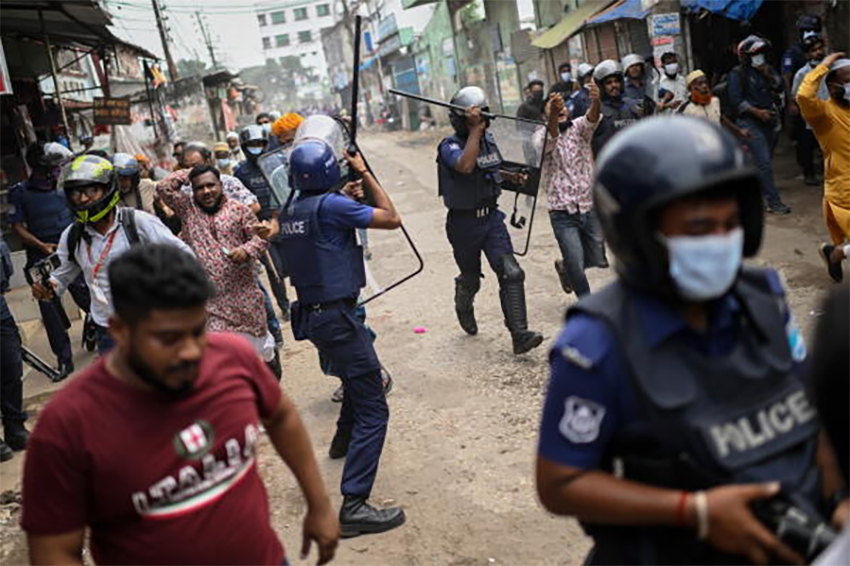
On Sunday morning, protesters gathered along the Dhaka-Tangail highway in Gazipur, temporarily blocking traffic for approximately an hour. Police eventually intervened to restore movement, while several factories suspended operations following the unrest.
Police Superintendent Mohammad Amjad Hossain confirmed that factories had been closed after workers abandoned their workplaces. He reported that 13 factories had shut down on Saturday night, with another 16 closing during disturbances the following morning.
The situation has also raised concerns among manufacturers, who fear prolonged industrial action could affect production schedules and international orders.
Bangladesh's garment sector is a major contributor to the national economy, generating approximately $40 billion in annual exports and accounting for about 10 per cent of the country's gross domestic product. The industry employs roughly four million people and supplies clothing to international retailers, including H&M, Primark and Zara.
The country is the world's second-largest exporter of ready-made garments after China, making any prolonged disruption potentially significant for global fashion supply chains.
Industry associations, including the Bangladesh Garment Manufacturers and Exporters Association and the Bangladesh Knitwear Manufacturers and Exporters Association, have called for stronger protection of factories during the protests.
BGMEA President Mahmud Hasan Khan warned that manufacturers whose operations had been disrupted would remain closed indefinitely under provisions of the country's labour laws.
The legislation allows factory owners to suspend operations and withhold wages when production becomes impossible because of industrial unrest, a provision commonly referred to as "No Work, No Pay".
The government established a minimum wage board on November 1 to review workers' demands and recommend a revised pay structure. The board, chaired by a senior district judge, is expected to complete its recommendations by the end of November.
The proposed wage changes are expected to take effect on December 1.
Until an agreement is reached, Bangladesh's garment industry faces the challenge of balancing workers' demands for improved living standards with manufacturers' concerns about operational stability and international competitiveness.