

Photo Credit: Getty Images
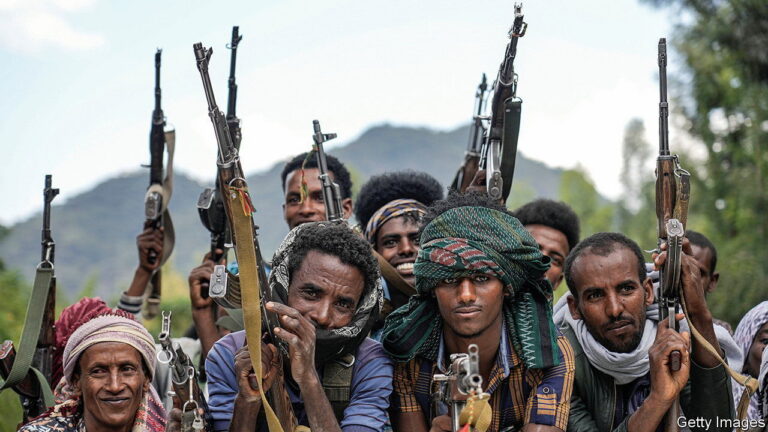
Several armed groups involved in conflicts across Ethiopia have announced the formation of a new coalition aimed at challenging the government in Addis Ababa.
The alliance, known as the Alliance for Survival, brings together seven organisations, including the Fano militia from the Amhara region, the Oromo Liberation Army, the Tigray People's Liberation Front and smaller groups operating in other parts of the country.
The organisations accuse Prime Minister Abiy Ahmed's administration of contributing to conflict, destruction and poverty and argue that Ethiopia faces the risk of further political and social fragmentation.
The announcement comes as Ethiopia continues to deal with armed violence in several regions. Oromia and Amhara have experienced prolonged conflict, while tensions have also resurfaced in Tigray following a devastating two year civil war.
The Tigray conflict ended with an African Union backed peace agreement in 2022 after hundreds of thousands of people were killed and millions displaced. However, concerns about renewed fighting have persisted, with both sides accusing the other of failing to fully respect the terms of the agreement.
The new coalition brings together organisations from regions including Oromia, Amhara, Tigray, Somali, Afar and Benishangul Gumuz. Together, these areas represent half of Ethiopia's 12 regional states.
Ethiopia's political system is based partly on ethnic federalism, with regional governments receiving a degree of autonomy. The system was designed around the country's numerous ethnic communities but has also contributed to political tensions and competing territorial interests.
The new alliance is particularly notable because some of its members have previously been on opposing sides of Ethiopia's conflicts. Fano, for example, fought alongside federal forces against the TPLF during the Tigray war. The group later turned against the federal government after resisting efforts to disarm its fighters.
Analyst Edward Bach of Verisk Maplecroft questioned whether the groups would be able to maintain a unified military strategy, noting that former allies can become opponents in Ethiopia's complex conflict environment.
Abdikadir Addaani Hirmooge, spokesperson for the Ogaden National Liberation Front, another member of the alliance, told the BBC that the coalition aims to bring communities together and promote democracy and self determination.
The government has been fighting the Oromo Liberation Army since 2018, while tensions involving other armed groups have continued to challenge federal authority.
The announcement also follows reports of closer relations between the TPLF and neighbouring Eritrea, developments that have raised concerns given Eritrea's involvement in the previous Tigray conflict.
Prime Minister Abiy has previously sought to reassure lawmakers that Ethiopia has the capacity to protect its sovereignty, saying he was not concerned about potential threats.
The country's recent general election also took place against this backdrop of conflict. Abiy's Prosperity Party retained an overwhelming parliamentary majority, although the election was criticised over limited opposition participation and insecurity.
Fano and the OLA rejected the election and its results, while Tigray and its estimated six million residents were excluded from the vote.
The new coalition now presents another challenge for a government already facing multiple armed conflicts and longstanding disputes over Ethiopia's political future.