

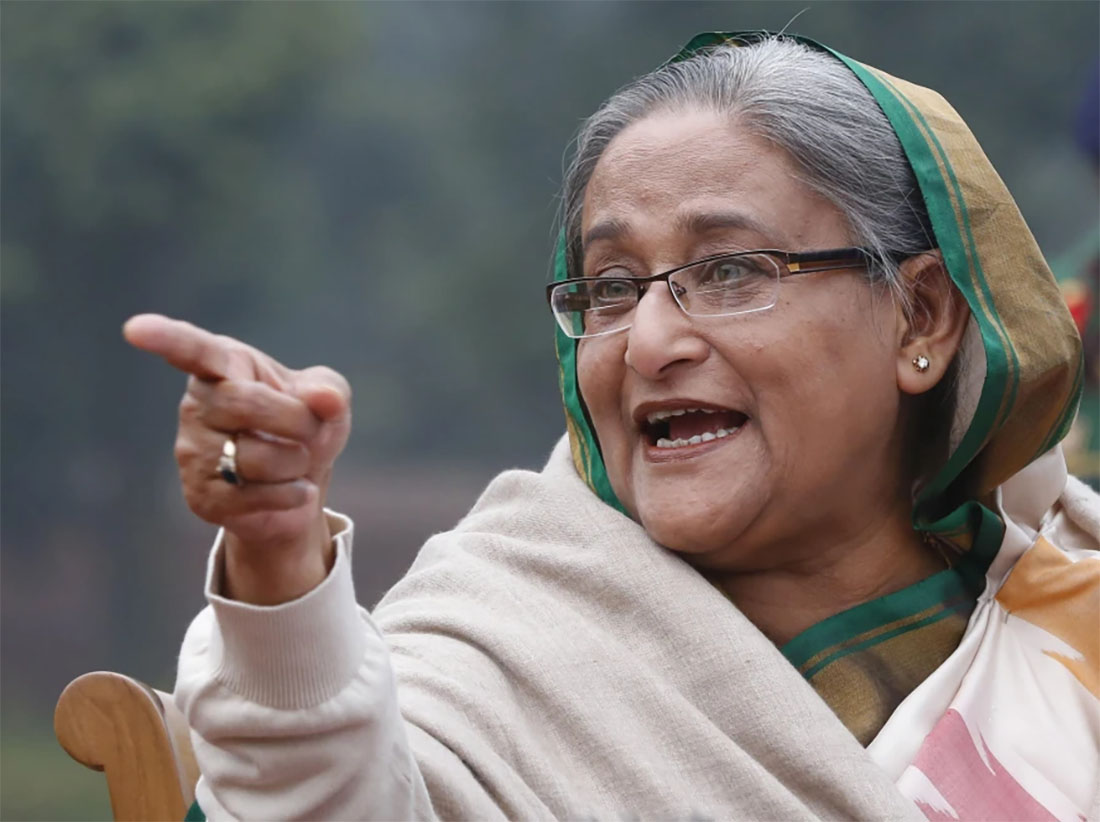
Photo Credit: Getty Images
Bangladesh's ousted prime minister, Sheikh Hasina, was sentenced to death in absentia on Monday after a months-long trial concluded she had ordered lethal force against student-led protests that toppled her government in 2024. The verdict, delivered by the International Crimes Tribunal in Dhaka, immediately triggered cheers inside the packed courtroom where relatives of victims had gathered, many of whom have long demanded the harshest possible punishment.
Hasina, 78, fled to India at the height of the unrest and issued a statement rejecting the tribunal's findings, calling the proceedings "politically engineered" and accusing the interim administration of attempting to erase the Awami League from national politics. Her former interior minister, Asaduzzaman Khan Kamal, was also sentenced to death in the same case.
The interim government led by Nobel laureate Muhammad Yunus labelled the judgment "historic" but urged the public to remain calm, warning that any attempt to exploit tensions would be met with force. Security was tightened across Dhaka ahead of the ruling, following days of crude bomb explosions and vehicles torched in the capital and other cities.
The court found Hasina guilty on three counts: incitement, authorizing killings, and failing to prevent atrocities during the weeks-long uprising. UN investigators estimate up to 1,400 people were killed during the protests between mid-July and early August last year, describing many of the deaths as extrajudicial killings. A leaked phone call, authenticated by independent analysts earlier this year, appeared to show Hasina authorising the use of "lethal weapons," and was presented in court as key evidence.
Bangladesh has formally asked India to extradite Hasina and her former minister, though New Delhi has not indicated it will comply. With elections set for February and the Awami League banned from participating, Hasina's conviction deepens the uncertainty around Bangladesh's political future.
For the families of the dead, the ruling represents long-awaited accountability. Yet rights activists warn the sentence may entrench divisions in a country already shaken by a year of instability. While some see the verdict as justice overdue, others argue that the death penalty risks overshadowing broader questions about state violence and democratic collapse.






