

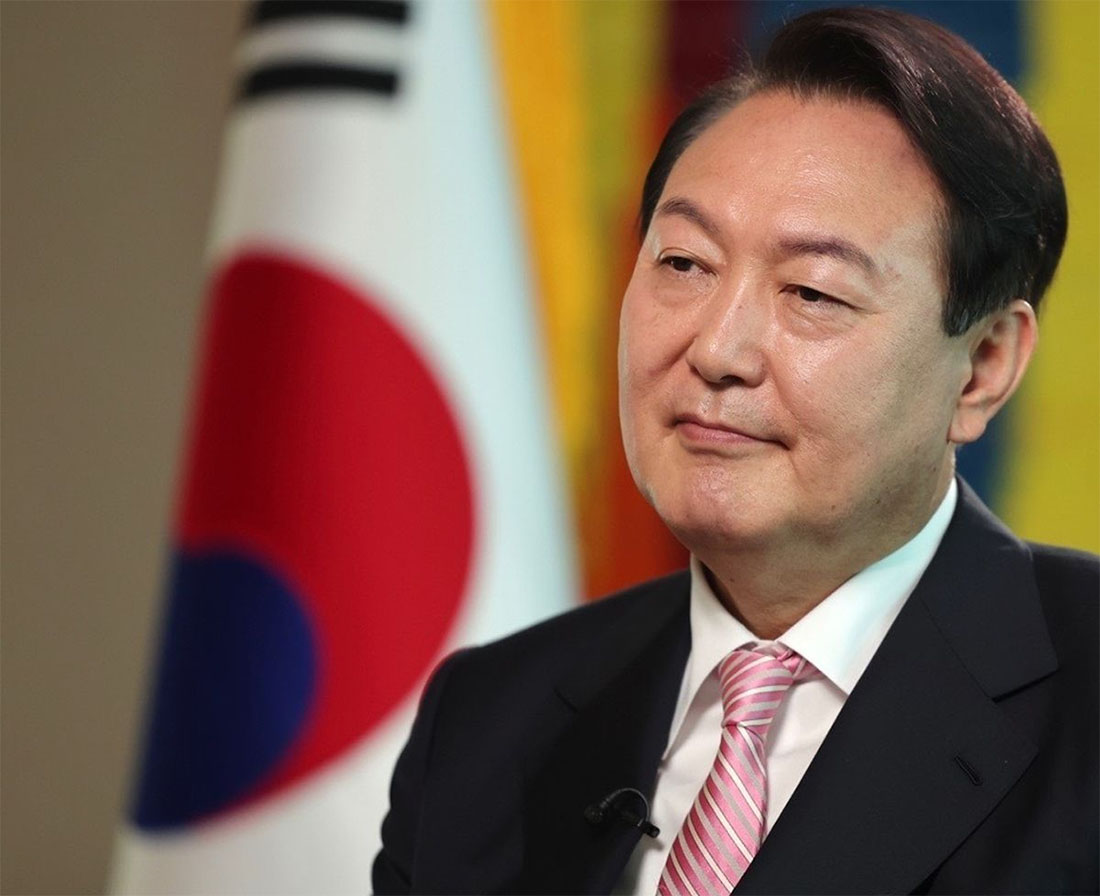
Photo Credit: Getty Images
South Korea's special prosecutor has formally requested the death penalty for former President Yoon Suk Yeol over his failed attempt to impose martial law in late 2024, marking one of the most dramatic legal reckonings in the country's modern political history.
The sentencing request was made Tuesday as Yoon's insurrection trial concluded at the Seoul Central District Court. Judges are expected to deliver their ruling on February 19. Yoon is charged with leading an insurrection, an offense that is explicitly excluded from presidential immunity under South Korean law and carries the maximum punishment of death.
If the sentence were carried out, it would represent South Korea's first execution in nearly three decades. While capital punishment remains legal, the country has not executed a prisoner since 1997 and is widely regarded by human rights groups as "abolitionist in practice."
During closing arguments, prosecutors said Yoon declared martial law with the intent of retaining power by undermining constitutional institutions. Special counsel Cho Eun-suk's team argued that the former president sought to neutralize the National Assembly and judiciary, describing the move as unconstitutional and illegal. Prosecutors added that Yoon had failed to show remorse or offer a meaningful apology to the public.
Yoon has denied all charges. He told the court that the declaration was within his constitutional authority and claimed it was meant to protect national sovereignty and democracy. At the time of the order, Yoon accused opposition lawmakers of engaging in anti-state activities and colluding with North Korea, allegations that were widely disputed.
On December 3, 2024, Yoon announced martial law in a late-night address and ordered troops to the National Assembly. Soldiers blocked entrances and clashed with protesters as lawmakers attempted to enter the chamber. Despite the lockdown, 190 of the 300 legislators managed to convene and unanimously voted to overturn the decree within three hours. Yoon lifted martial law roughly six hours after it began.
The episode sent shockwaves through South Korea, a major U.S. ally and Asia's fourth-largest economy long viewed as a stable democracy. It also revived memories of past military rule, including the 1979 coup by Chun Doo-hwan and the violent suppression of the 1980 Gwangju uprising.