
Photo Credit; Getty Images

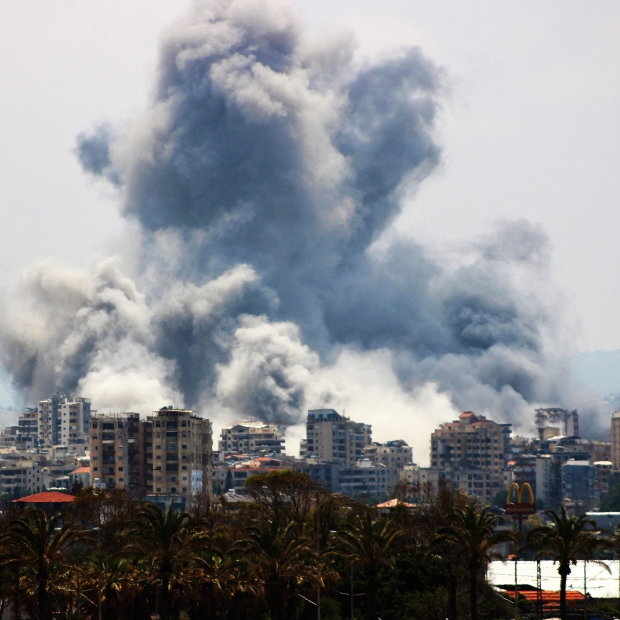
Lebanon's President Joseph Aoun has called for direct negotiations with Israel to de-escalate the ongoing conflict with Hezbollah. Aoun also sharply criticized Hezbollah, an Iran-backed group, for drawing Lebanon into a wider regional war. According to a spokesperson, Lebanon is prepared to negotiate but only once Israeli attacks cease.

Speaking during a virtual meeting with senior European Union officials on Monday, Aoun outlined what he described as a path towards "permanent security and stability arrangements on our borders".

Israeli officials have shown little sign of backing negotiations.

Under the Lebanese president's four-point plan, a "complete truce" would coincide with the disarmament of Hezbollah, and international assistance for the Lebanese Armed Forces to help them regain control of "areas of tension".

"And simultaneously, Lebanon and Israel begin direct negotiations under international sponsorship, in order to execute the aforementioned plan," a statement said.


Photo Credit; Getty Images

The escalating conflict in the Middle East is sending shockwaves through energy markets and global supply chains, raising concerns that a regional war could morph into a broader economic crisis.

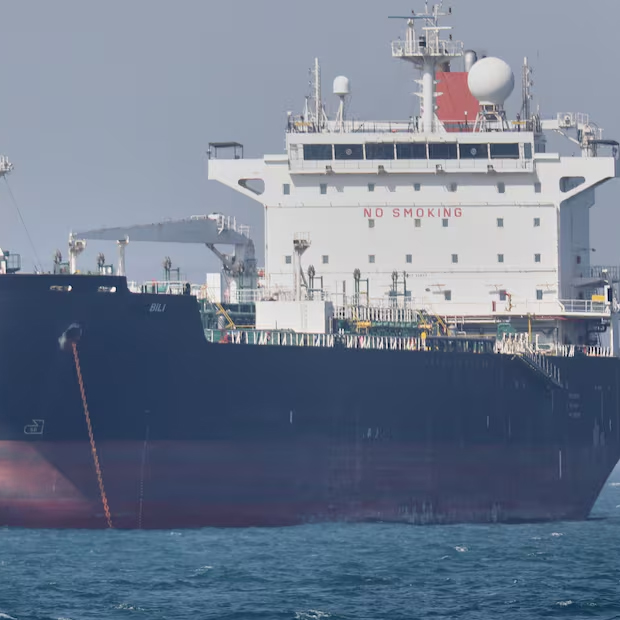
Shipping companies have paused sailings through the Strait of Hormuz after strikes by the United States and Israel on Iran heightened security risks. The narrow channel, which links the Gulf to the open ocean, is one of the world's most critical oil chokepoints.

Key Points

Major carriers including Maersk, MSC, Hapag-Lloyd and CMA CGM have rerouted vessels. Energy traders are bracing for higher crude and gas prices. Businesses face longer delivery times and rising freight costs.

In 2023, roughly a fifth of global petroleum liquids consumption flowed through Hormuz, according to the U.S. Energy Information Administration. Any sustained disruption threatens to squeeze supplies, lift benchmark crude prices and feed inflation worldwide.


Photo Credit; Getty Images

Iran's Supreme Leader Ali Khamenei left behind a corrupt and repressive legacy, following his assassination on February 28.

Before his death, he was the longest-serving ruler in the Middle East, having taken power in 1989 following the death of his mentor Ruhollah Khomeini.

His 36 years and eight months leading Iran resulted in the mass repression of women, the slaughter of civilians and the funding of terror groups including Hamas and Hezbollah.

But among the most wicked things he did was to amass a business empire worth an estimated $95billion by systematically seizing thousands of properties belonging to ordinary Iranians.


Photo Credit; Getty Images

Israeli Defense minister, Israel Katz has warned that any Iranian figure chosen to replace Supreme Leader Ali Khamenei would be considered a target for assassination.

Katz made the statement on Wednesday, March 4, following reports that Khamenei was killed during coordinated US-Israeli airstrikes on Tehran — a dramatic escalation in a long-running shadow conflict between the two nations.

“Any leader selected by the Iranian terror regime to continue leading the plan for Israel’s destruction, threatening the United States, the free world and countries in the region, and suppressing the Iranian people, will be a certain target for assassination, no matter his name or where he hides,” Katz wrote in a post on X.


Photo Credit; Getty Images

At least 153 people, including many children, were killed after a reported missile strike struck a girls' school in the southern Iranian town of Minab, according to Iranian officials, as the country reels from a wave of U.S. and Israeli air operations.

Iran's Red Crescent said hundreds more were injured in the attack, which it described as one of the deadliest single incidents since strikes began across the country on Saturday morning. State media initially reported dozens dead, later revising the toll sharply upward as rescue teams pulled bodies from the rubble.


Photo Credit; Getty Images

Members of Iran's women's national soccer team remained silent during their country's national anthem before their opening match at the AFC Women's Asian Cup, in what appeared to be a protest amid escalating tensions in the Middle East.

Ahead of their game against South Korea on Monday, March 2, at Gold Coast Stadium in Queensland, Australia, the players stood together on the pitch as the anthem played but did not sing along. Video footage from the moment shows the team maintaining silence in a gesture that many interpreted as a response to the ongoing conflict affecting their home country.

Iran went on to lose the match 3-0. Despite the result, their actions drew admiration from fellow athletes and commentators who praised their composure and courage during a difficult period.

RECENT NEWS

LATEST JOB OFFERS

AROUND THE CITIES