

Photo Credit: Getty Images
More than five decades after it shocked the psychological research community, the Stanford Prison Experiment is returning to public attention through a new Netflix series that revisits one of the most debated studies in the history of psychology.
Conducted in 1971 by American psychologist Philip Zimbardo, the experiment sought to investigate how ordinary people might behave when placed in positions of authority or subjected to institutional control. Its findings were widely interpreted as evidence that circumstances and social roles could encourage otherwise ordinary individuals to engage in cruel behaviour.
The study involved 24 male college students selected from more than 70 applicants who responded to a newspaper advertisement seeking participants for research into prison life. They were randomly assigned roles as prisoners or guards inside a mock prison established in the basement of a Stanford University building.
The experiment was intended to last up to two weeks but was terminated after only six days following escalating tensions and concerns about participants' wellbeing.
According to the traditional account, the situation deteriorated rapidly. Prisoners rebelled against their treatment, prompting guards to respond with increasingly humiliating and intimidating measures. Some participants displayed signs of psychological distress, while others were released early.
However, the study's reputation has changed significantly over the years as researchers and historians have questioned both its methods and its conclusions.
Catherine Sanderson, a psychology professor at Amherst College and a former student of Zimbardo, has highlighted concerns about the researcher's involvement in the experiment. Evidence from recordings and interviews suggests that Zimbardo and his associates may have influenced the guards' behaviour rather than simply observing what developed naturally.
Critics argue that this involvement undermines the study's scientific credibility. French historian Thibault Le Texier, who examined archival records and recordings, has argued that the experiment was shaped by instructions that encouraged particular behaviours.
The findings have also been challenged by alternative research. A later BBC prison study, conducted by psychologists Stephen Reicher and Alex Haslam, produced a different outcome. Rather than becoming increasingly brutal, the guards struggled to establish authority, while prisoners developed a stronger sense of unity.
Reicher has argued that leadership and group identity are essential to understanding how people behave within institutions. He has also warned against using situational pressure as a blanket excuse for abusive conduct.
The debate gained renewed significance after the 2004 Abu Ghraib prison abuse scandal, when photographs of American soldiers mistreating Iraqi detainees prompted comparisons with Zimbardo's research. Zimbardo subsequently became a prominent commentator on the scandal and explored the relationship between circumstances and wrongdoing in his 2007 book, The Lucifer Effect.
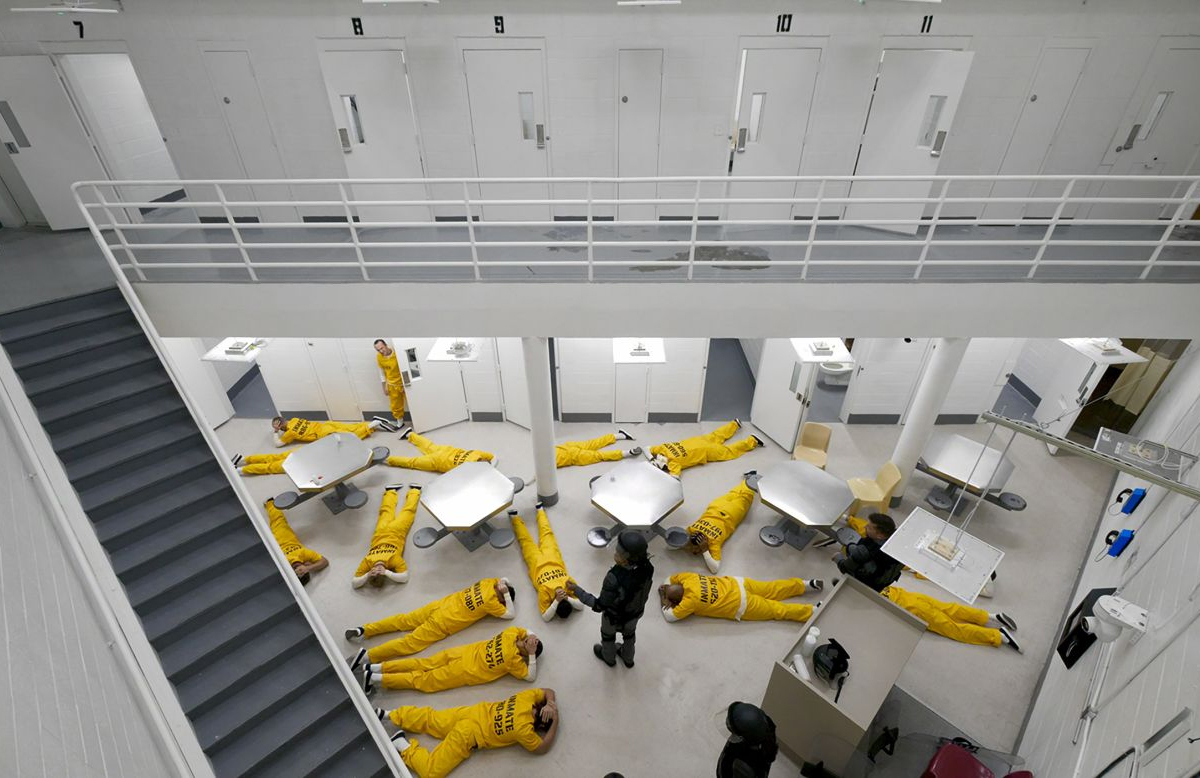
The new Netflix series, The New Stanford Prison Experiment, does not attempt to reproduce the original study as a scientific experiment. Its producers say participants undergo psychological screening and can leave at any time using a safe word.
The series introduces a new group of participants and a more structured environment, raising questions about how much its results can tell viewers about real prison systems or human nature.
The original experiment remains influential, but its legacy is increasingly complicated. Researchers continue to debate whether it revealed fundamental truths about power or demonstrated how flawed research methods can produce compelling but unreliable conclusions.
As Netflix brings the story to a new generation, the central question remains whether people become cruel because of the roles they occupy, the leadership they follow, or the choices they make within those circumstances.