

Photo Credit: Getty Images
At a location once alive with music, energy, and global attention, a silent piece of history now stands neglected just a short distance away. The Faenol Estate, known for hosting massive cultural and musical events, is home to a Grade II listed mausoleum that has gradually fallen into disrepair despite its architectural and historical importance.
In 2010, the estate drew tens of thousands of music fans during BBC Radio 1’s Big Weekend, where global stars like Rihanna and Justin Bieber performed. The event attracted around 40,000 attendees on site, with millions more tuning in remotely. Years earlier, in 2005, the estate had hosted the National Eisteddfod, drawing hundreds of thousands over the course of a week. Additionally, the Faenol Festival, organized by Bryn Terfel, consistently attracted over 30,000 visitors annually between 2000 and 2009.
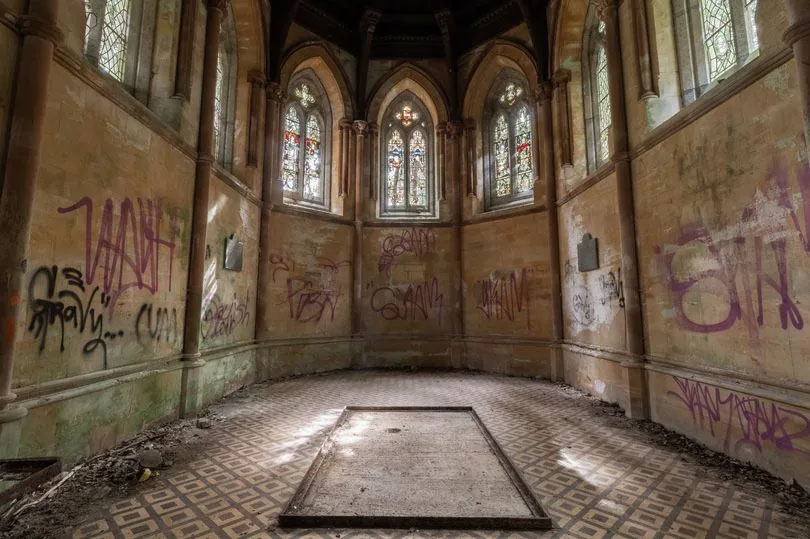
Yet, hidden within nearby woodland and largely unnoticed by the crowds, lies the Faenol Mausoleum. Once described as a cosy and romantic folly, the structure now tells a different story. Covered in graffiti, with shattered windows and visible signs of neglect, the mausoleum has recently been placed on the endangered buildings list by the Victorian Society.
The building dates back to the late nineteenth century and was constructed for the Assheton Smith family, who owned the estate at a time when it spanned approximately 36,000 acres. Their wealth was closely tied to the Dinorwig slate quarry, a major contributor to Britain’s slate production. Designed by architect Henry Kennedy, the mausoleum features French Gothic elements, including a bell tower and an impressive hammerbeam roof, all enclosed within an octagonal boundary lined with iron railings.
Despite being recognized for its grandeur by heritage body Cadw, the mausoleum’s condition has deteriorated significantly. The primary reason cited for its decline is fragmented ownership, which has left responsibility for its maintenance unclear. Although parts of the estate are managed by organizations such as the National Trust, no single entity has taken charge of preserving the mausoleum itself.
The issue has drawn attention from public figures such as Griff Rhys Jones, who described the structure as an extraordinary find for walkers exploring the nearby Wales Coast Path. He emphasized that the situation reflects a familiar pattern where historically significant buildings fall into neglect due to complicated ownership arrangements. He called for decisive intervention to restore the monument and bring it back to life.
The Victorian Society has highlighted the mausoleum as one of its top ten most endangered buildings in Wales and England, hoping this recognition will spark action. According to its director, the structure remains a rare and evocative part of the historical landscape, with clear potential to become a valued heritage asset once again.
With thousands of walkers passing nearby each year, there is still an opportunity for the Faenol Mausoleum to be rediscovered and appreciated. However, without coordinated care and intervention, this once significant landmark risks fading further into obscurity, overshadowed by the very events that brought global attention to the estate around it.