

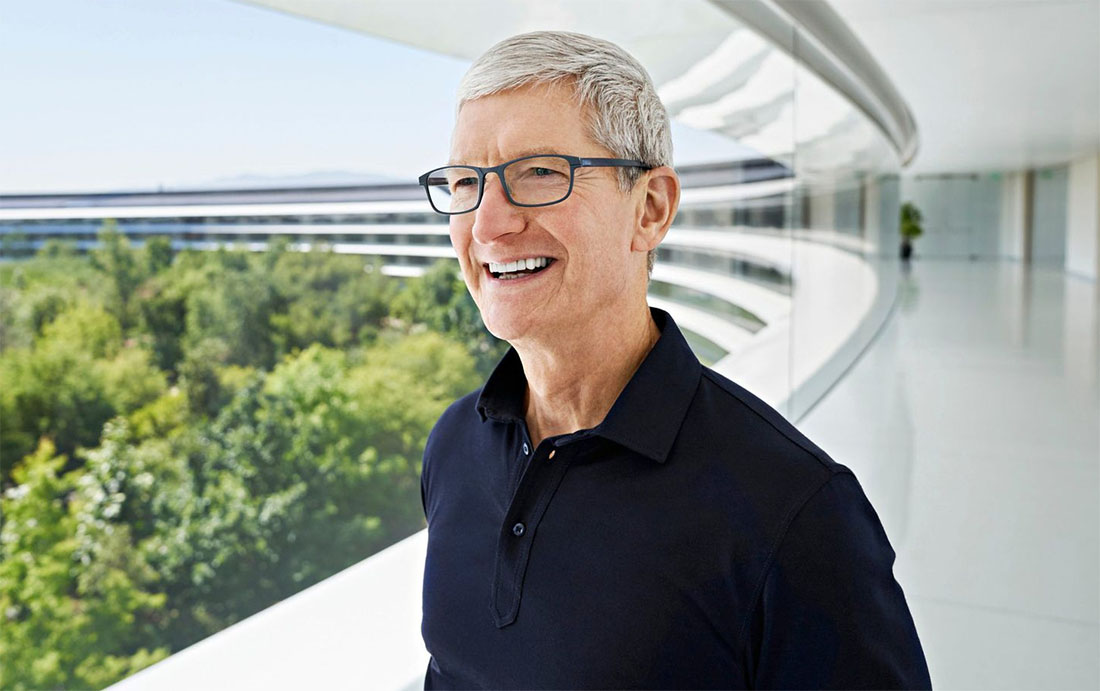
Photo Credit: Getty Images
When Tim Cook took over as Apple's chief executive in August 2011, he inherited one of the most demanding positions in the technology industry. Succeeding Steve Jobs meant stepping into the shadow of a celebrated innovator, but 15 years later, Cook leaves behind a record shaped less by imitation and more by his own distinctive leadership.
Cook's tenure transformed Apple into one of the world's most valuable companies. The company's stock has risen by more than 2,000% since he became chief executive, while Apple briefly reached a $5 trillion market valuation in July. Under his leadership, the iPhone became increasingly integrated into everyday life through services and accessories that extended its role beyond a traditional smartphone.
Harvard Business School professor David Yoffie, who studied Apple and Cook, said Cook succeeded in expanding the iPhone to a scale that few would have considered possible when he assumed leadership.
Much of Cook's success has been linked to his background in operations and supply chain management. However, analysts say his ability to negotiate, make swift decisions and maintain relationships across competing political environments became equally important.
Apple's dependence on China presented one of his greatest challenges. The country remains central to the company's manufacturing operations and is also an important consumer market. Cook sought to diversify production while maintaining relationships with Chinese authorities and customers.
At the same time, he developed a relationship with US political leaders that helped Apple navigate changing trade policies. Under pressure from the Trump administration to increase American manufacturing, Apple pledged $600 billion in US investments, including efforts to produce critical iPhone components domestically.
Gene Munster of Deepwater Asset Management described Cook as both a chief executive and a statesman, highlighting the unusual political and diplomatic demands of running Apple.
His successor, hardware engineering chief John Ternus, now inherits a company facing several significant challenges. Apple continues to contend with European Union regulations, including changes to its App Store operations. Its redesigned Siri has also faced delays in Europe because of regulatory requirements.
Artificial intelligence represents another major test. Apple faces increasing pressure to keep pace with competitors, while its Vision Pro headset has struggled to meet expectations. A global memory chip shortage linked to the artificial intelligence boom could also increase production costs.
As Cook prepares to step aside, his advice to Ternus has remained straightforward: concentrate on products that enrich customers' lives. For a leader who spent 15 years turning Apple into a technological and financial powerhouse, that philosophy may prove to be his most enduring legacy.