

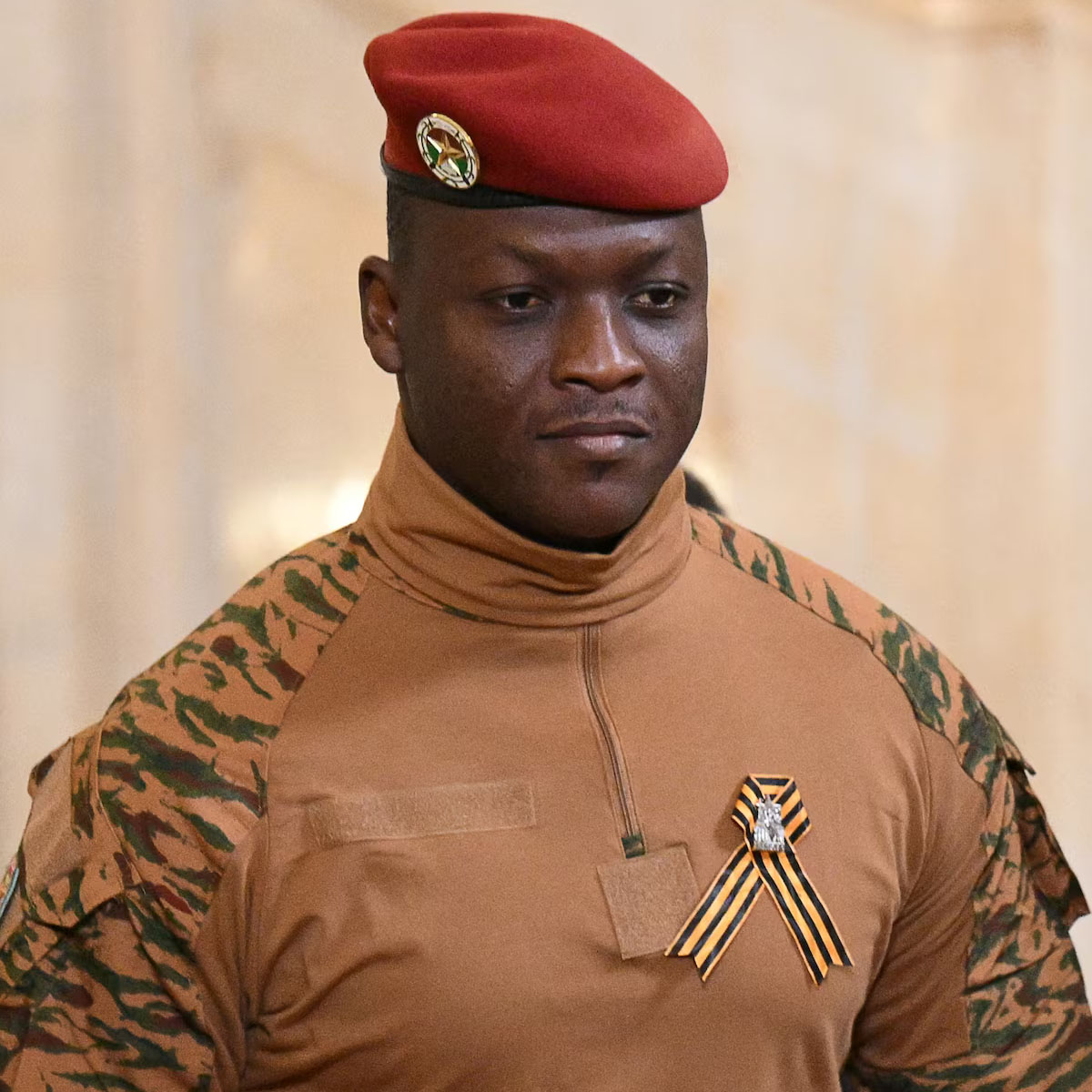
Photo Credit: Getty Images
Ibrahim Traoré, the military ruler of Burkina Faso, has sparked intense debate after declaring that democracy is not suitable for his country and should be abandoned. Speaking in an interview aired on state television, Capt Traoré argued that democracy brings harm rather than progress, stating bluntly that it “kills” and should be forgotten by the people.
Traoré, who came to power through a coup three years ago, had initially promised to restore democratic governance by July 2024. However, just months before the deadline, his administration extended military rule by five years, signaling a clear shift away from earlier commitments. In January, the government escalated this move by banning all political parties, describing them as divisive and dangerous to national unity.
In his remarks, Traoré criticized the role of political parties in Burkina Faso, portraying them as sources of instability rather than representation. He suggested that politicians embody negative traits such as dishonesty and manipulation, arguing that the current political model has failed the country. According to him, Burkina Faso needs a completely new system rooted in sovereignty, patriotism, and grassroots participation rather than imported democratic frameworks.
The junta leader also pointed to Libya as an example to support his claims. He argued that attempts by Western powers to impose democracy often lead to violence and instability. Libya, which experienced decades of authoritarian rule under Muammar Gaddafi, has struggled to establish stability following his overthrow, remaining divided and unable to hold consistent elections. Traoré used this case to reinforce his belief that democracy, especially when externally influenced, can result in chaos rather than progress.
Despite rejecting democracy, Traoré did not clearly outline what governance system would replace it. He emphasized instead that Burkina Faso would develop its own approach, tailored to its history and needs. He highlighted the role of traditional leaders and community based structures, suggesting a model built on local values rather than foreign systems.
Traoré also stressed the importance of economic and military self reliance. He argued that the country must work harder to catch up with wealthier nations, stating that shorter workdays would not be enough to achieve meaningful development. His broader vision includes reducing dependence on Western nations and strengthening national independence.
However, his leadership has faced criticism. Reports from Human Rights Watch indicate that more than 1800 civilians have been killed since he took power in 2023, with a significant portion of these deaths attributed to the military and allied groups. The government has also been accused of suppressing dissent, targeting opposition voices, media, and civil society.
Even so, Traoré has gained considerable support both within Burkina Faso and across parts of Africa. His strong stance against Western influence and his pan African rhetoric have resonated with many who feel disillusioned with existing political systems.
Burkina Faso, along with neighboring countries like Mali and Niger, has also shifted its alliances away from Western partners, particularly France, and moved closer to Russia for military cooperation. Despite these changes, the ongoing insurgency by Islamist militants continues to challenge stability in the region.
Traoré’s rejection of democracy marks a significant moment in Burkina Faso’s political trajectory, raising questions about governance, stability, and the future direction of the country.