

Photo Credit: Getty Images
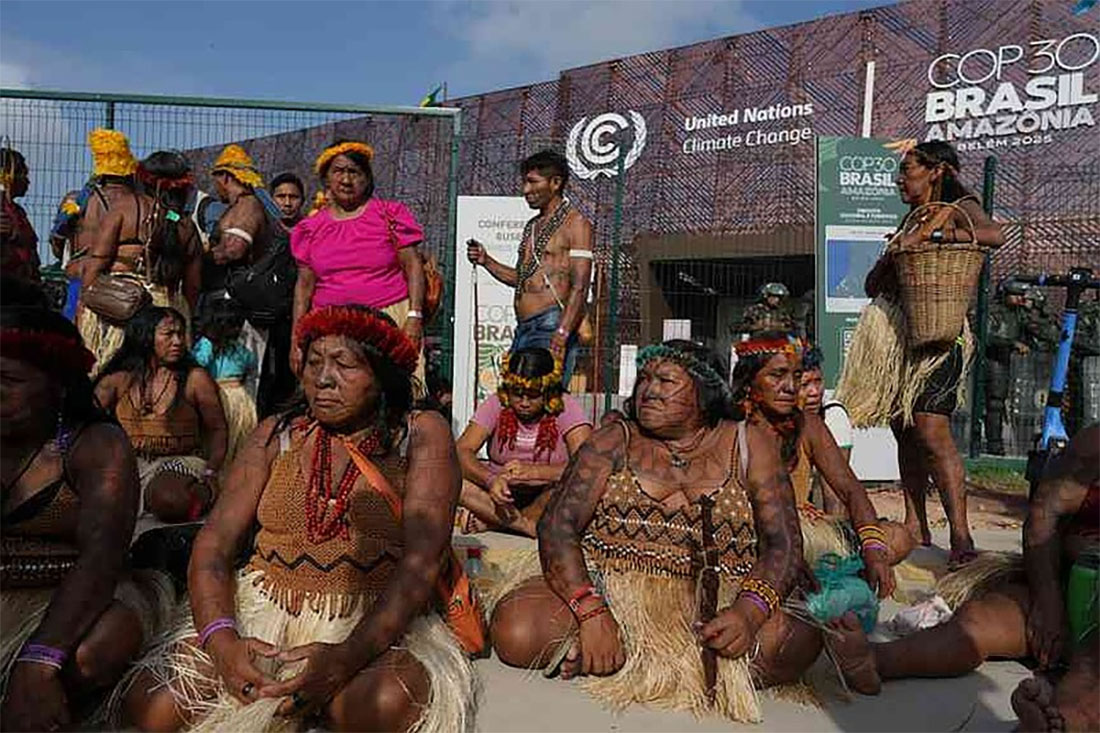
A significant demonstration by Indigenous protesters unfolded outside the COP30 summit venue in Belem, Brazil, forcing climate delegates to enter through alternate gates as negotiations continued inside. The peaceful sit-in, held early Friday morning, became one of the most visible expressions of Indigenous frustration over development projects in the Amazon. Security personnel intensified entrance checks, resulting in long queues as representatives from nearly two hundred nations attempted to navigate the restricted pathways of the sprawling compound.
The protesters, led by the Munduruku Indigenous group, issued an emphatic statement directed at Brazilian President Luiz Inacio Lula da Silva, demanding a halt to mining, logging, oil exploration, and a proposed railway intended to support extraction and agricultural transport. The group argued that these activities threaten both their livelihood and the ecological integrity of the Amazon, which remains central to global climate regulation. Their message asserted that Indigenous communities should not be sacrificed for economic interests, highlighting their crucial role in forest preservation.
The Munduruku territory spans nearly twenty four thousand square kilometers in northern Brazil, an area comparable in size to the state of New Hampshire in the United States. Their presence at COP30 reinforced a long-standing demand for meaningful inclusion in climate policy decisions, particularly those affecting ancestral lands. As environmental pressures escalate, Indigenous groups have increasingly become vocal participants in international climate dialogue, citing their unique position as frontline protectors of biodiversity.
COP30 President Andre Correa do Lago was seen engaging directly with protesters, signaling an attempt to maintain communication and ensure the continuation of summit proceedings. The United Nations climate body later confirmed that no threats to safety had emerged despite the disruption. This demonstration followed a more forceful action earlier in the week, during which some protesters clashed briefly with security personnel while entering the venue. Those involved described their actions as a reflection of the urgency surrounding forest protection and the existential risks posed by unchecked development.
The protest occurred against the backdrop of critical negotiations aimed at preventing further rises in global temperatures. Delegates at COP30 are focused on measures to safeguard vulnerable ecosystems, including the Amazon rainforest, whose stability is essential for global climate security. The presence of Indigenous demonstrators served as a poignant reminder that the success of international climate efforts depends not only on diplomatic agreements but also on the inclusion and recognition of those who have protected these lands for generations.






