

Photo Credit:Getty Images
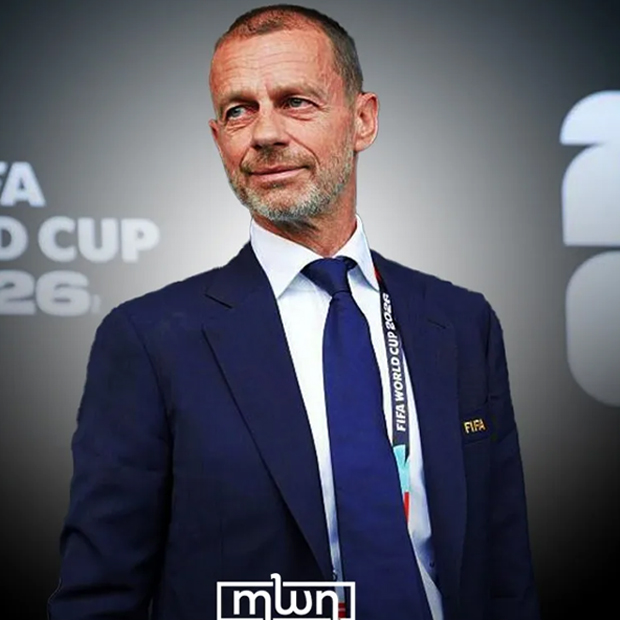
Uefa president Aleksander Ceferin chose not to attend the FIFA World Cup final between Argentina and Spain, boycotting the showpiece event in protest against a series of decisions made by world football's governing body.
Although the Slovenian travelled to Mexico City for the tournament's opening match between co-hosts Mexico and South Africa, he opted against making the trip to New Jersey for Sunday's final. His decision reflected growing tensions between Uefa and Fifa over several controversial issues that emerged during the competition.
One of the main reasons behind Ceferin's boycott was Fifa's decision to allow United States striker Folarin Balogun to avoid suspension after intervention from US President Donald Trump. Uefa strongly criticised the ruling, describing it as an unprecedented move that undermined confidence in football's disciplinary system.
In a statement issued after the decision, Uefa argued that the integrity of the sport is threatened when established rules are no longer applied consistently. The organisation maintained that the credibility of any competition depends on fairness and equal treatment for every team and player.
Ceferin has also voiced opposition to several initiatives championed by Fifa president Gianni Infantino. Among them is the introduction of entertainment performances during the World Cup half-time break. The final featured appearances by international stars including Madonna, BTS, Shakira and Justin Bieber, with the interval lasting more than 27 minutes instead of the traditional 15.
Uefa has made it clear that similar half-time shows will not be introduced at either the Champions League or the European Championship.
The European governing body has also rejected the possibility of expanding the World Cup to 64 teams, an idea Infantino indicated could be explored in future editions of the tournament.
Other areas of disagreement have included officiating and disciplinary policies. After Somali referee Omar Artan was unable to enter the United States before the World Cup, Uefa appointed him to officiate the upcoming Super Cup between Paris Saint-Germain and Aston Villa on 12 August.
Ticket pricing has also become a point of contention. Uefa intends to keep ticket prices for Euro 2028 largely unchanged, contrasting its approach with the significantly higher costs experienced by supporters attending matches in the United States.
Further differences have emerged over VAR protocols and disciplinary rules. Unlike Fifa, Uefa has instructed its officials not to treat simulation under the mistaken identity protocol and will also avoid automatically issuing red cards to players who cover their mouths during on-field confrontations, highlighting the widening divide between the two organisations.