Photo Credit; Getty Images

Facebook is actively recruiting top-tier digital creators, offering them $3,000 per month to post content on its platform through its "Content Fast Track" program. The social media giant, boasting over 3 billion users, is targeting influencers who command more than a million followers on competitor video sites, specifically citing Instagram, TikTok, and YouTube in its program announcement. This initiative follows Meta's revelation that its parent company paid out nearly $3 billion to creators across all its monetization programs in 2025.

"You're always following audiences as a creator and so this doesn't fix it," said Jordan Schwarzenberger, manager of content creators the Sidemen. "I love Facebook and I love Meta and what they do, but this feels like a bit of a desperate move.”


Photo Credit; Getty Images

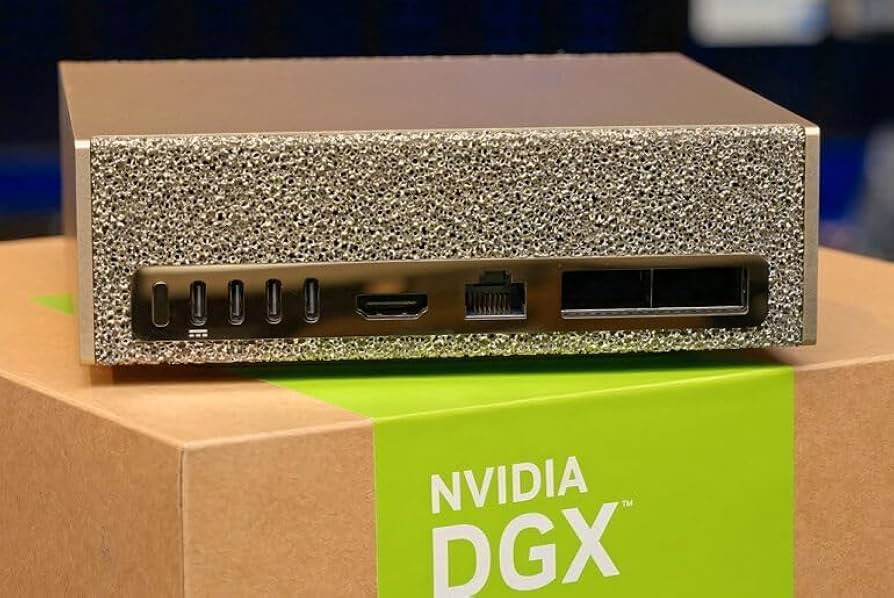
A new artificial intelligence-powered graphics feature from chip giant Nvidia is drawing mixed reactions, as excitement over its visual potential clashes with growing concern from gamers and industry professionals.

The tool, known as DLSS 5, was unveiled at the company's annual Graphics Technology Conference and is expected to launch later this year. Nvidia says the upgrade will enable "photoreal" visuals in real-time gameplay, bringing effects once limited to Hollywood productions into everyday gaming.

Demonstrations showed dramatic changes in lighting, textures and character detail across popular titles, with environments appearing sharper and more cinematic. According to Nvidia, the technology builds on earlier advances like ray tracing, pushing graphical realism to new levels.


Photo Credit: Getty Images

When the four astronauts of the Artemis II mission travel farther from Earth than any humans in more than fifty years, they will be relying on technology that many photographers would now consider old school. Instead of using the latest mirrorless systems, the crew will bring two Nikon D5 DSLR cameras aboard the Orion spacecraft as they journey into the Moon’s vicinity.

The Artemis II crew includes Reid Wiseman, Victor Glover, Christina Koch, and Jeremy Hansen. During a recent video shared on the NASA Artemis Facebook page, Wiseman and Koch were seen after a photo TV session demonstrating the camera that will document their mission. Wiseman referred to the Nikon D5 as an old school choice, but the decision was anything but casual.

THE CAMERA HEADING TO DEEP SPACE

The Nikon D5 is a full frame 20.8 megapixel DSLR that was released in 2016. While it may not be the newest camera in Nikon’s lineup, it has earned a reputation for reliability and performance under demanding conditions. NASA confirmed that astronauts on Artemis II will use flight qualified Nikon D5 systems equipped with wide angle and telephoto lenses to capture images both inside and outside the Orion spacecraft.

Some observers have questioned why the crew will not use newer models such as the Nikon Z9, which is currently available aboard the International Space Station. NASA has stated that future Artemis missions will incorporate next generation camera systems that are still undergoing spaceflight qualification. For Artemis II, the D5 remains the trusted option.

The choice is rooted in performance. The Nikon D5 is known for its low noise output and strong dynamic range. These qualities are essential in space, where astronauts must photograph extreme contrasts between bright sunlit spacecraft surfaces and the deep darkness beyond. The D5 also demonstrated strong resistance to radiation effects, an important factor beyond low Earth orbit where exposure levels are higher.

Another standout feature is its remarkable ISO range, which extends up to 3,280,000. By comparison, the Nikon Z9 tops out at 102,400. Even when Z9 files are resized to match the D5 resolution, the older DSLR can deliver cleaner results at very high ISO settings. In the darkness of deep space, that sensitivity could prove invaluable, although the crew will likely rely on post processing tools to manage image noise.

MORE THAN JUST DSLRS

The D5 cameras will not be the only imaging tools onboard. The astronauts will also be allowed to bring personal smartphones, and handheld GoPro cameras will be supplied as part of a documentary project for National Geographic. These additional devices will offer a range of perspectives from professional grade still photography to behind the scenes video.

Among the crew, Christina Koch may be especially well positioned to capture memorable images. During her 328 consecutive days in space between 2019 and 2020, the longest continuous stay in space by a woman, she produced a number of striking photographs that she later shared publicly.

As anticipation builds for Artemis II, the mission has faced a delay. The rocket intended to launch the spacecraft is being rolled back from the launchpad due to a helium system issue. What was once targeted for early March is now expected no sooner than April.

Even with the delay, the mission represents a historic step in human space exploration. And when Artemis II arcs around the Moon, the images that define this journey will be captured not by the newest mirrorless technology, but by a decade old DSLR that has proven it can handle the harshest conditions beyond Earth.


Photo Credit; Getty Images

Anthropic has filed a first-of-its-kind lawsuit against the US government after being designated a "supply chain risk." The legal action follows a public dispute between CEO Dario Amodei and Defense Secretary Pete Hegseth over the military's access to Anthropic's AI tools. In the lawsuit filed Monday against multiple agencies, the company argues that the government's designation—the first ever applied to a US firm—is "unprecedented and unlawful.”

"The Constitution does not allow the government to wield its enormous power to punish a company for its protected speech", Anthropic wrote. "No federal statute authorizes the actions taken here."


Photo Credit; Getty Images

Elon Musk's artificial intelligence startup xAI has lost two co-founders in less than two days. Jimmy Ba announced his exit Tuesday, one day after fellow co-founder Tony Wu stepped down. The departures come as xAI merges with SpaceX and faces scrutiny over its Grok chatbot.

Elon Musk's xAI has lost its second co-founder in 48 hours, marking another leadership shakeup at the fast-growing artificial intelligence company.

RECENT NEWS

LATEST JOB OFFERS

AROUND THE CITIES